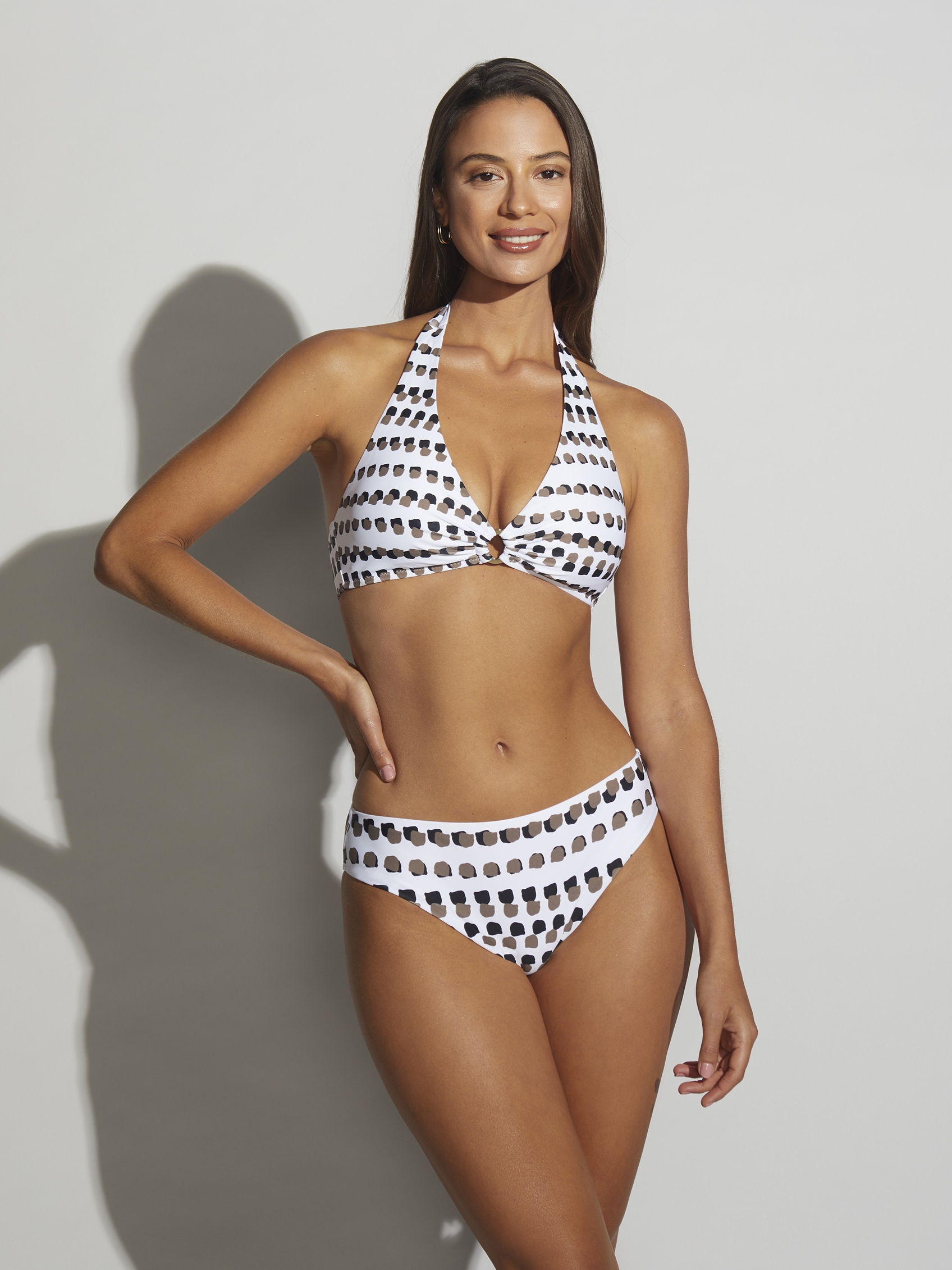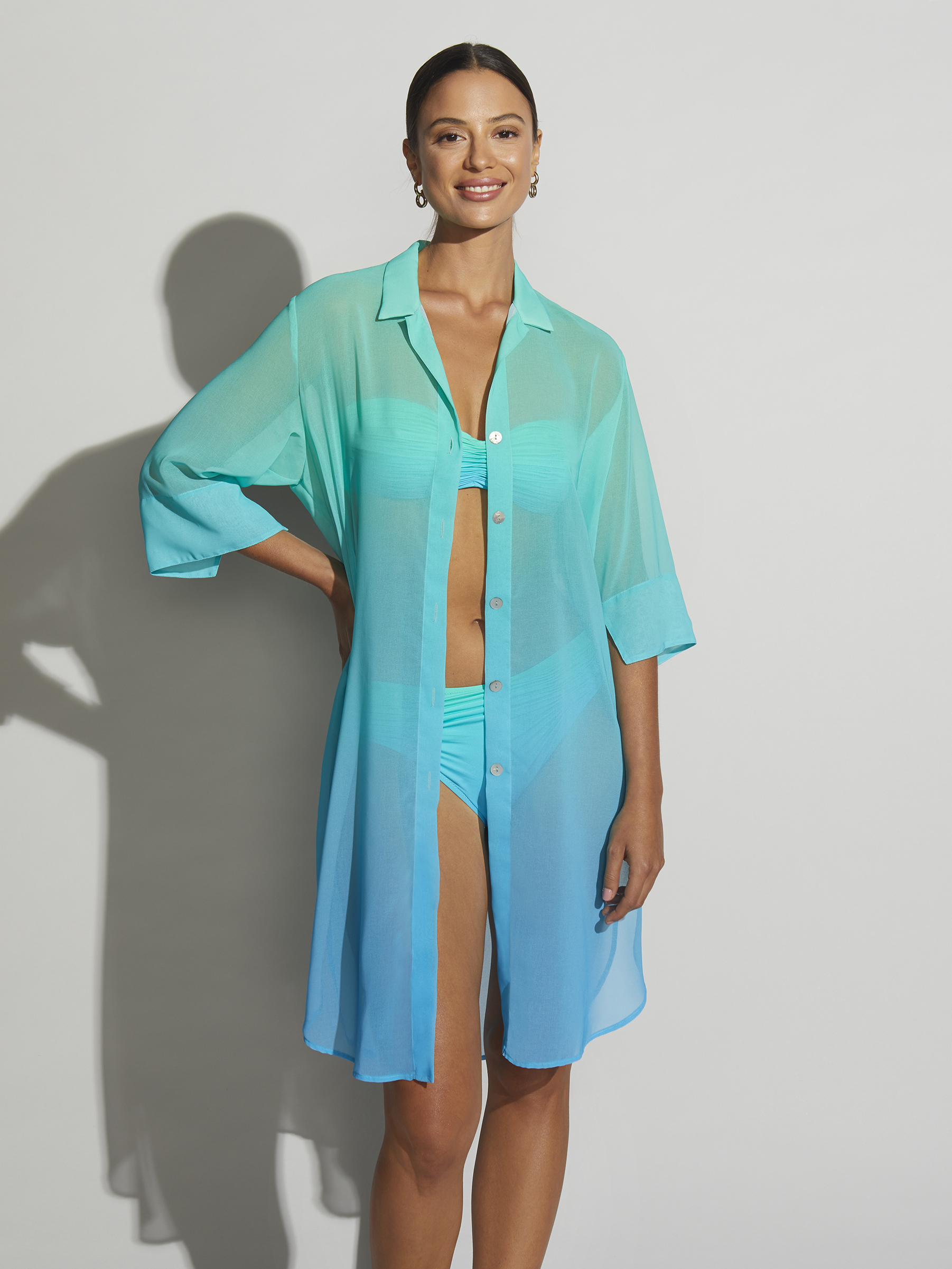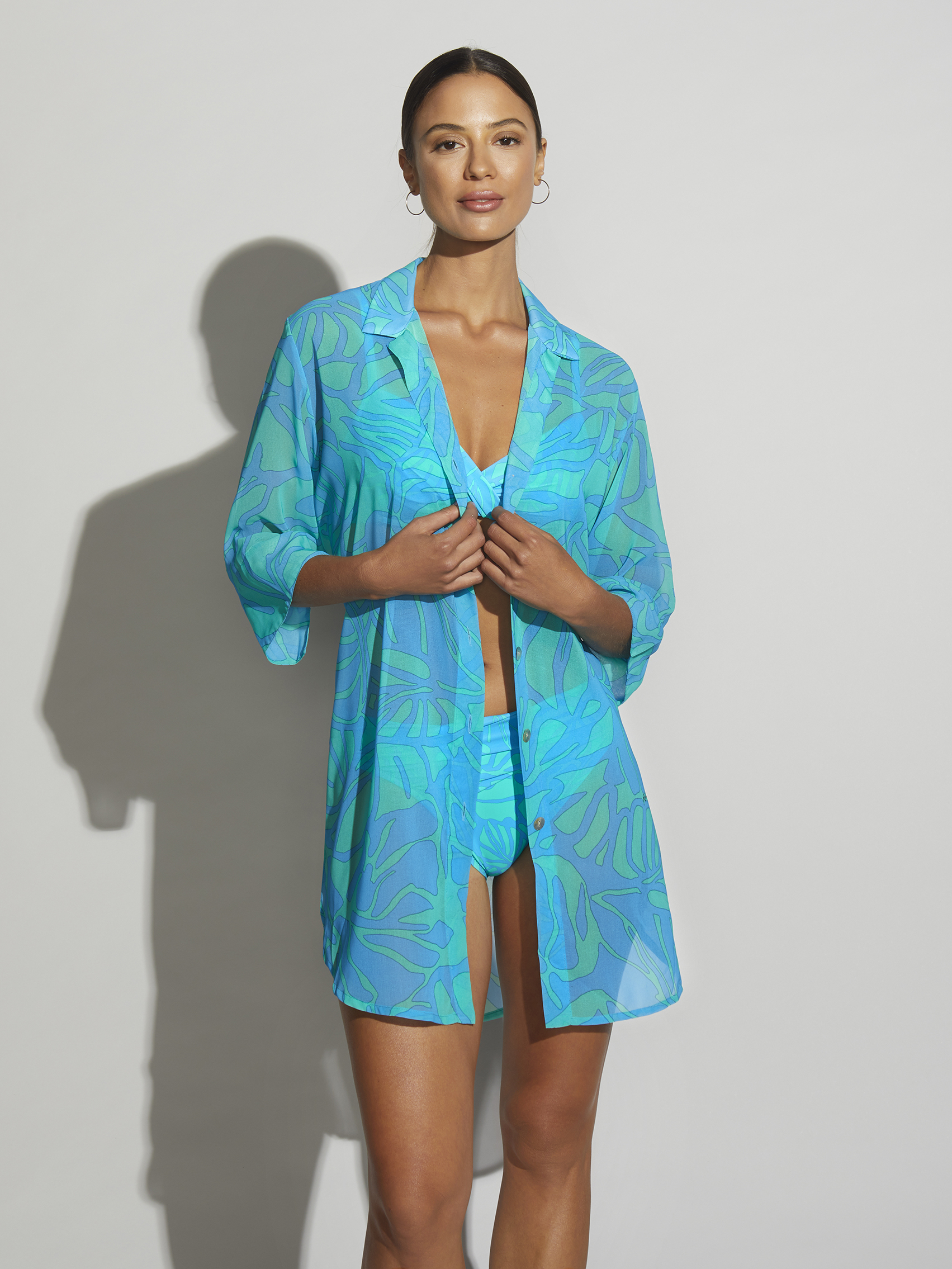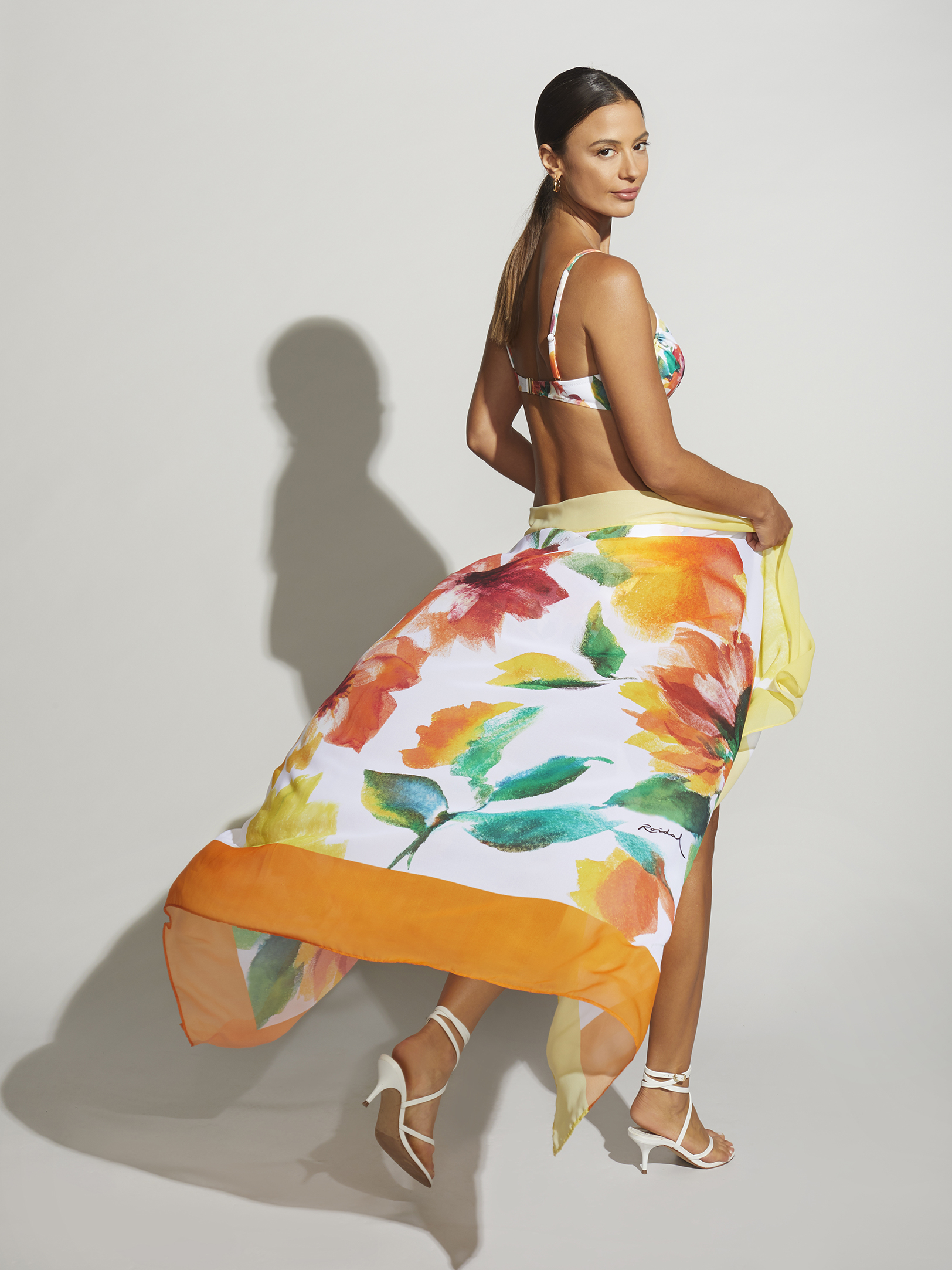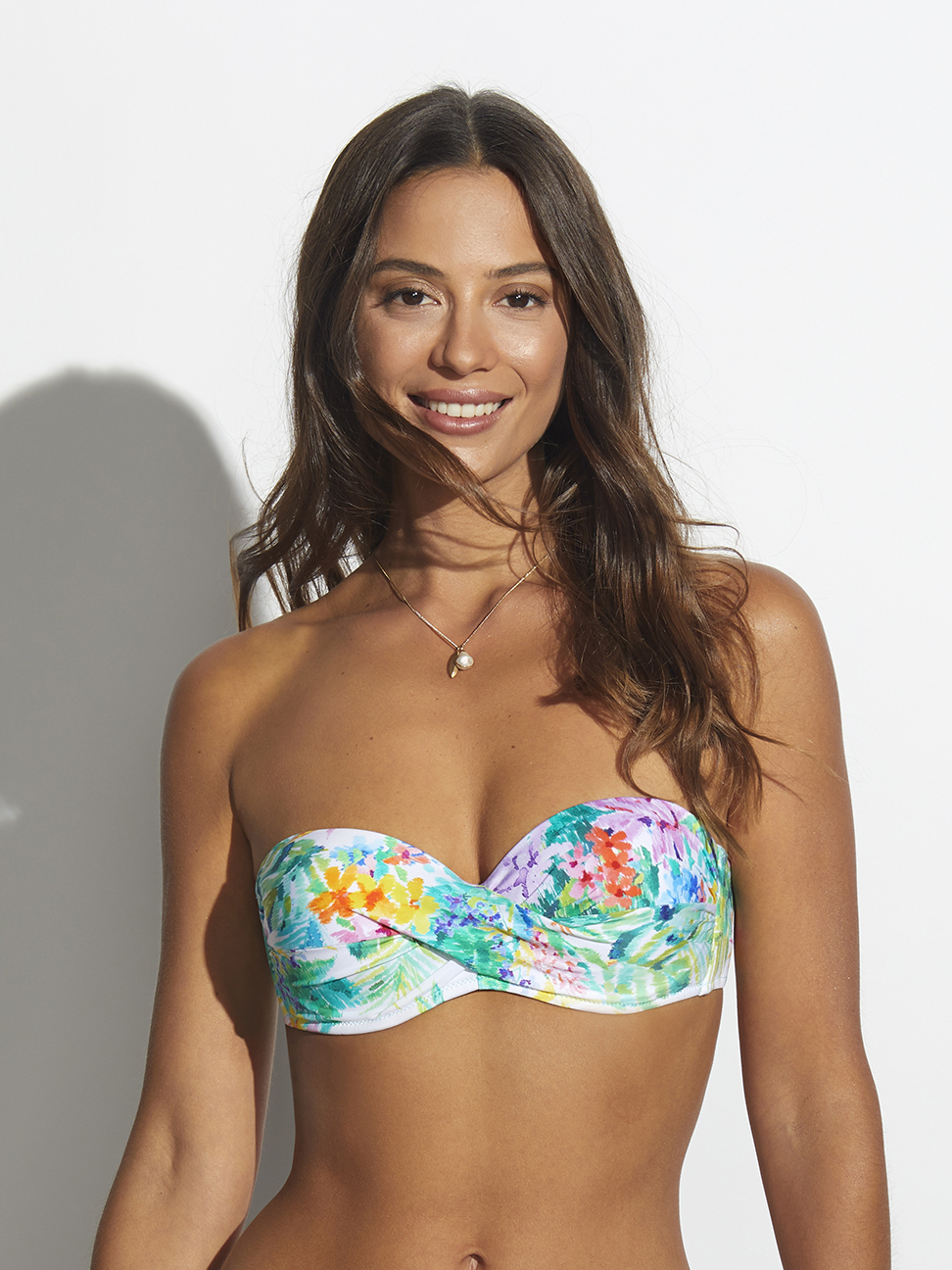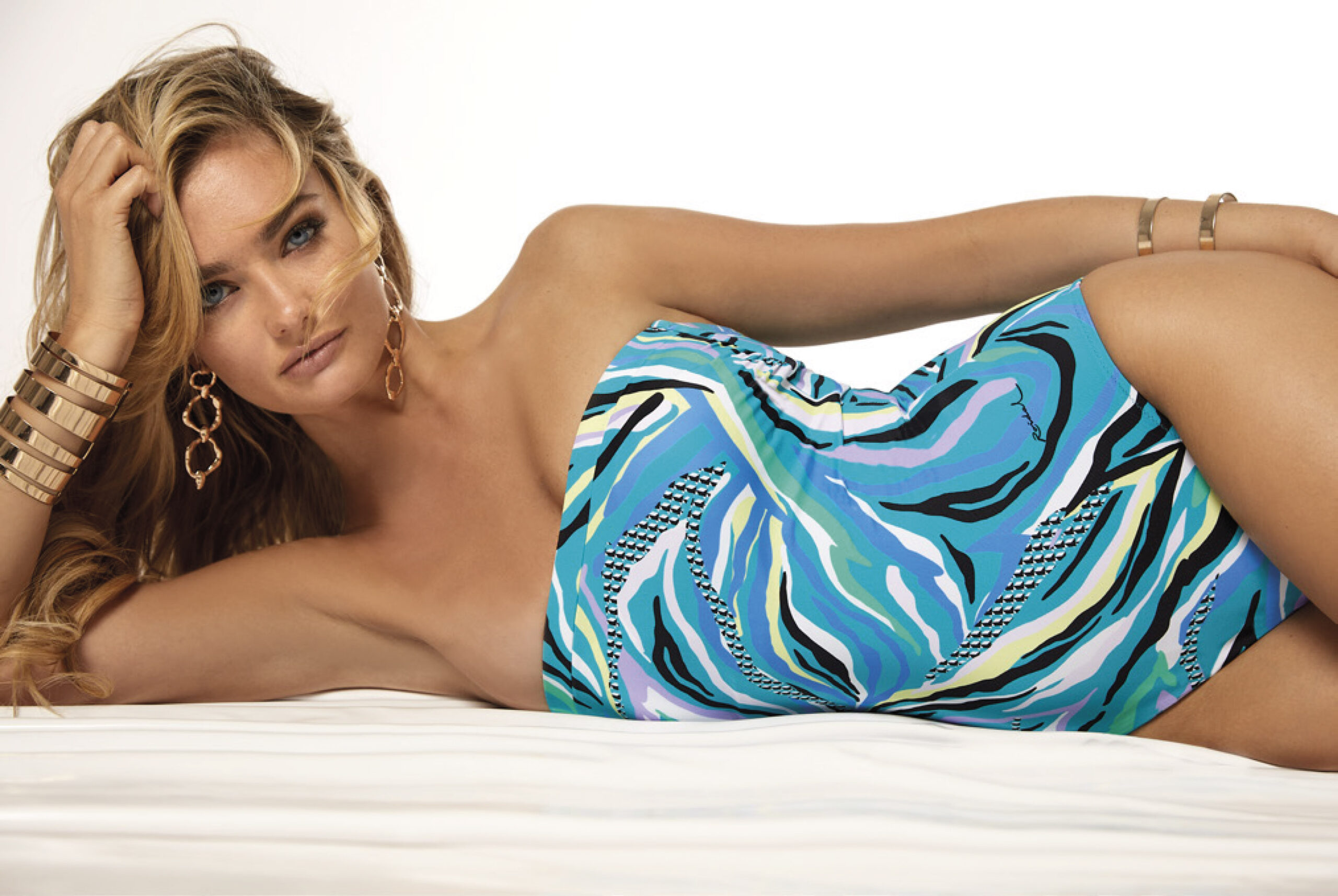
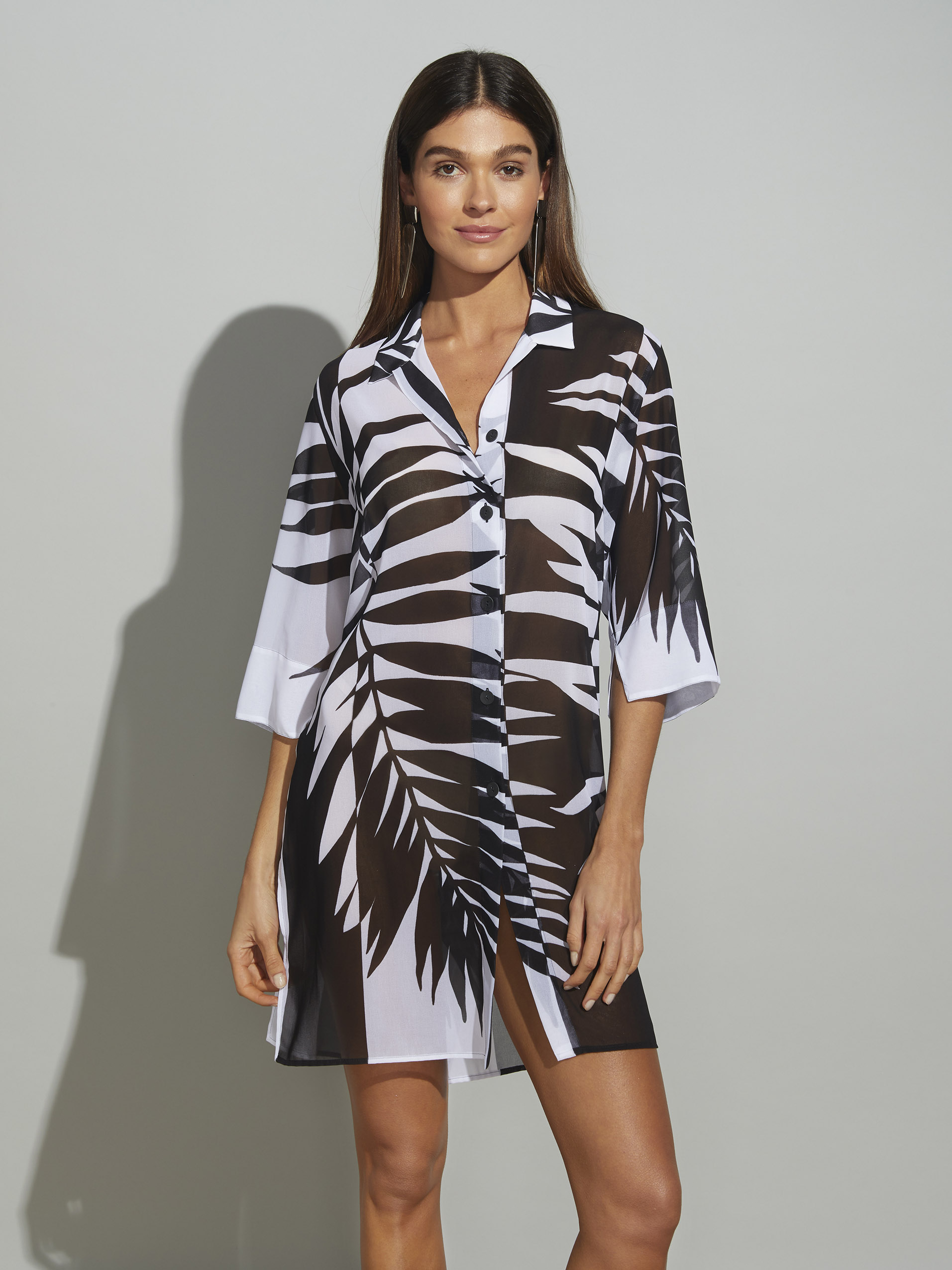
Camisola de playa camisera de Roidal para llevar sobre el bikini o el bañador

Beach Cover-Ups: What They Are and How to Combine Them with Your Swimwear

The beach cover-up is one of the most versatile pieces for completing a swimwear look. Its loose cut, the lightness of the fabric and how easily it layers over a bikini or swimsuit let you gain coverage without giving up a polished silhouette. At Roidal we design every cover-up to work with the colour, print and construction of the swimsuit, not as an isolated add-on.

What a beach cover-up is and why you need one this summer

A beach cover-up is a light coverage piece worn over a swimsuit or bikini. It can have a straight, A-line or semi-structured cut, with side slits, sleeves, straps or an open neckline. The choice of cut and fabric determines its drape, its transparency and freedom of movement; that is why it is worth assessing the piece as part of the complete look.

Unlike a sarong, whose shape depends on how it is tied, the cover-up keeps a defined structure thanks to its pattern making. Compared with a beach dress, it usually offers a lighter, more open construction. Chiffons, openwork fabrics, fine knits and light crepes allow different levels of coverage and movement. To better understand the difference between the two pieces, see our guide on what a sarong is and how to choose it.

A beach cover-up for women provides coverage on the shoulders, neckline and arms, but it does not replace a broad-spectrum sunscreen nor guarantee UV protection unless the fabric has a specific UPF certification. As a leading brand and reference in Spain and Europe in women’s swimwear, at Roidal we work these pieces with the same criteria of pattern making, colour coordination and finish that we apply to our Made in Spain swimwear.

Types of beach cover-ups by style

Not all beach cover-ups serve the same purpose. The length, the volume, the sleeve, the opening and the density of the fabric change both the coverage and the way the piece follows the body.

  • Long cover-up: reaches the knee or below and offers greater coverage. Straight cuts create a cleaner line; A-line shapes add more movement. It is a suitable option for going from the beach to a terrace or a stroll without changing your whole look.
  • Short or mid-length cover-up: ends at the hip or thigh and leaves the swimsuit more visible. It is practical when you alternate swims, walks and activities on the sand, because it adds coverage without piling on too much fabric.
  • Hooded cover-up: adds a light layer around the head and neck and can be comfortable in breezy spots. It should not be considered certified sun protection if the fabric does not state a UPF factor.
  • Cover-up with embroidery or graphic details: concentrates the visual weight on finishes, openwork, fringes or prints. It is best combined with a plain swimsuit or a coordinated palette to avoid competing focal points.
  • White beach cover-ups: act as a neutral, luminous base. Their final effect depends on the density and the weave: a fine chiffon offers more transparency, while a compact or embroidered fabric provides greater visual coverage.

Before choosing, think about the level of coverage, the type of activity and the swimsuit you are going to combine it with. Those three criteria are more useful than choosing on trend alone.
Beach Cover-Ups: What They Are and How to Combine Them with Your Swimwear

How to combine beach cover-ups with your swimwear

To combine beach cover-ups with swimwear, look at three elements: proportion, colour and visual weight. A piece can echo tones from the bikini or swimsuit, create a controlled contrast or introduce texture, but the look should keep a clear focal point.

Combining cover-ups with printed bikinis

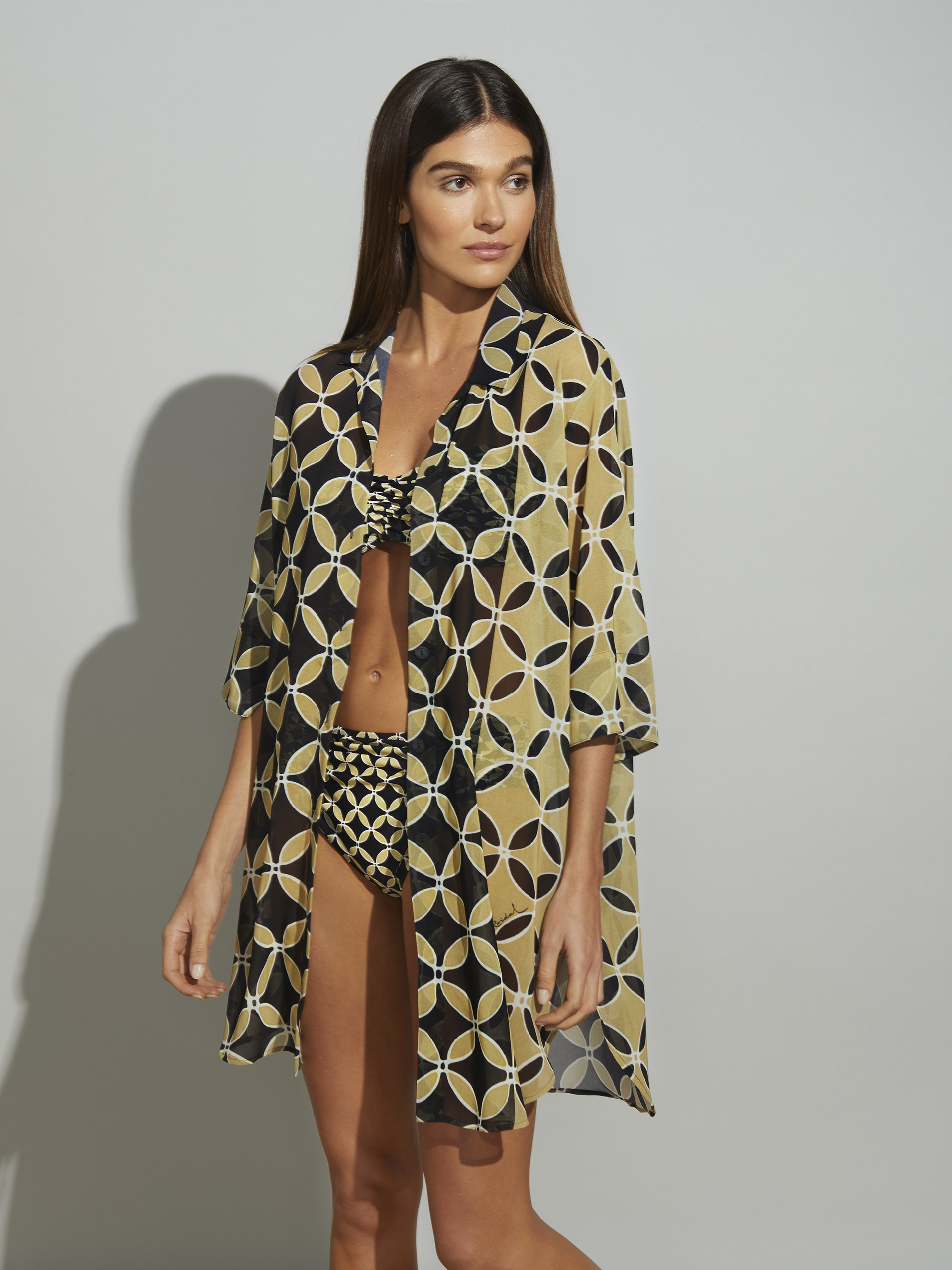
If you choose a printed bikini, a plain cover-up in white, ecru or one of the print’s secondary tones helps tidy up the look. You can also wear it open to keep the bikini pattern visible and preserve a lighter reading.

If the cover-up carries the print, a plain bikini can pick up one of its main or secondary colours. The two tones do not need to be identical: it is enough that they share a colour temperature or level of saturation for the look to feel coherent.

Combining cover-ups with swimsuits

The swimsuit creates a continuous visual surface, so it takes cover-ups with more texture or movement. A long, fluid design can contrast with a swimsuit of clean lines. If the neckline is strapless or asymmetric, an open, sleeveless or thin-strap cover-up lets that construction keep the spotlight.

Plain swimsuits make it easy to combine with embroidered, openwork or printed cover-ups. In that case, it is a good idea to repeat one tone of the swimsuit in some detail of the cover-up to connect both pieces without making the look uniform.

Style tip: if you wear a long, open cover-up, a flat sandal with clean lines keeps the look light and avoids adding visual volume at the bottom.

Coordinating colours between the cover-up and the swimsuit or bikini

The monochromatic combination is a safe solution: cover-up and swimsuit share the same colour family, even if they use different intensities. A navy bikini with a sky-blue or white cover-up creates continuity without the pieces looking identical.

Another option is tonal contrast. A coral, fuchsia or emerald-green bikini gains visual clarity next to a white or ecru cover-up. White beach cover-ups work especially well when you want to balance saturated colours.

When and where to wear the beach cover-up

The cover-up is not only for the water’s edge. Its versatility makes it a piece for many contexts throughout the beach day.

  • At the shore: the transition from the towel to the water is the most common moment. The cover-up protects while you walk, and comes off when you get into the sea.
  • At the beach bar or terrace: a long cover-up and a pair of sandals are enough to sit down for lunch without going back to the hotel to change.
  • On the promenade: the cover-up with some shorts or light linen trousers can easily pass as a casual evening look in coastal destinations.
  • On a boat: the sea breeze makes the cover-up’s light fabrics the most comfortable and elegant option at the same time.

This versatility depends on the quality of the pattern, the seams and the fabric recovery. To assess a piece, check the regularity of the stitching, the stability of the edges, the symmetry and the care instructions on the label.

How to assess the quality of beach cover-ups for women

The quality of a cover-up shows in the drape, the fabric recovery, the stability of the seams and the cleanliness of the finishes. A light material does not have to be fragile: the composition, the weight, the type of weave and the making determine how it responds to moisture, rubbing and washing.

At Roidal we apply to beachwear the same design criteria as to bikinis and swimsuits: in-house pattern making, coordination between pieces and attention to seams, finishes and drape. If you want to go deeper into composition, elasticity and durability, see our guide on types of fabrics for swimwear.

Care tip: always follow the label for composition and washing. As a general rule, avoid wringing light fabrics and intense heat; remove excess water with gentle pressure and dry the piece without straining seams or embroidery.

Quick guide to choosing your beach cover-up by silhouette

There is no single valid cut for every body. The following table summarises common visual effects of the cut and can serve as guidance, always behind the real fit and each person’s comfort:

Silhouette Recommended cut Flattering detail
H (straight) figure Cover-up with flare or embroidery Adds volume and visual curves
Triangle figure (wider hips) Long cover-up with a straight drape Balances proportions visually
Inverted triangle figure (wider shoulders) Sleeveless cover-up with a fluid cut Softens the upper area and lengthens the figure
Rounded (curvy) figure Semi-structured, mid-length cover-up Defines the silhouette without clinging
Hourglass figure Practically every cut Cover-ups slightly fitted at the waist enhance the proportion

These guidelines are not fixed rules. The right piece is the one that lets you move comfortably, keeps its drape and matches the level of coverage you are looking for.

Why white beach cover-ups are a timeless staple

White beach cover-ups stay season after season because they bring light and neutrality. They go with a wide range of swimsuits, although the result changes with the undertone of the white, the transparency and the texture of the fabric.

A white cover-up in fine chiffon lets the bikini colour show through; a more compact fabric creates a more defined visual layer. To pack it, fold it along the seams and avoid compressing embroidery, appliqus or fibres the label flags as prone to creasing.

White also lets the print, the neckline or the construction of the swimsuit hold the attention of the look.

If you are after a first, easy-to-coordinate cover-up, white, ecru or a neutral close to your usual palette are versatile options.
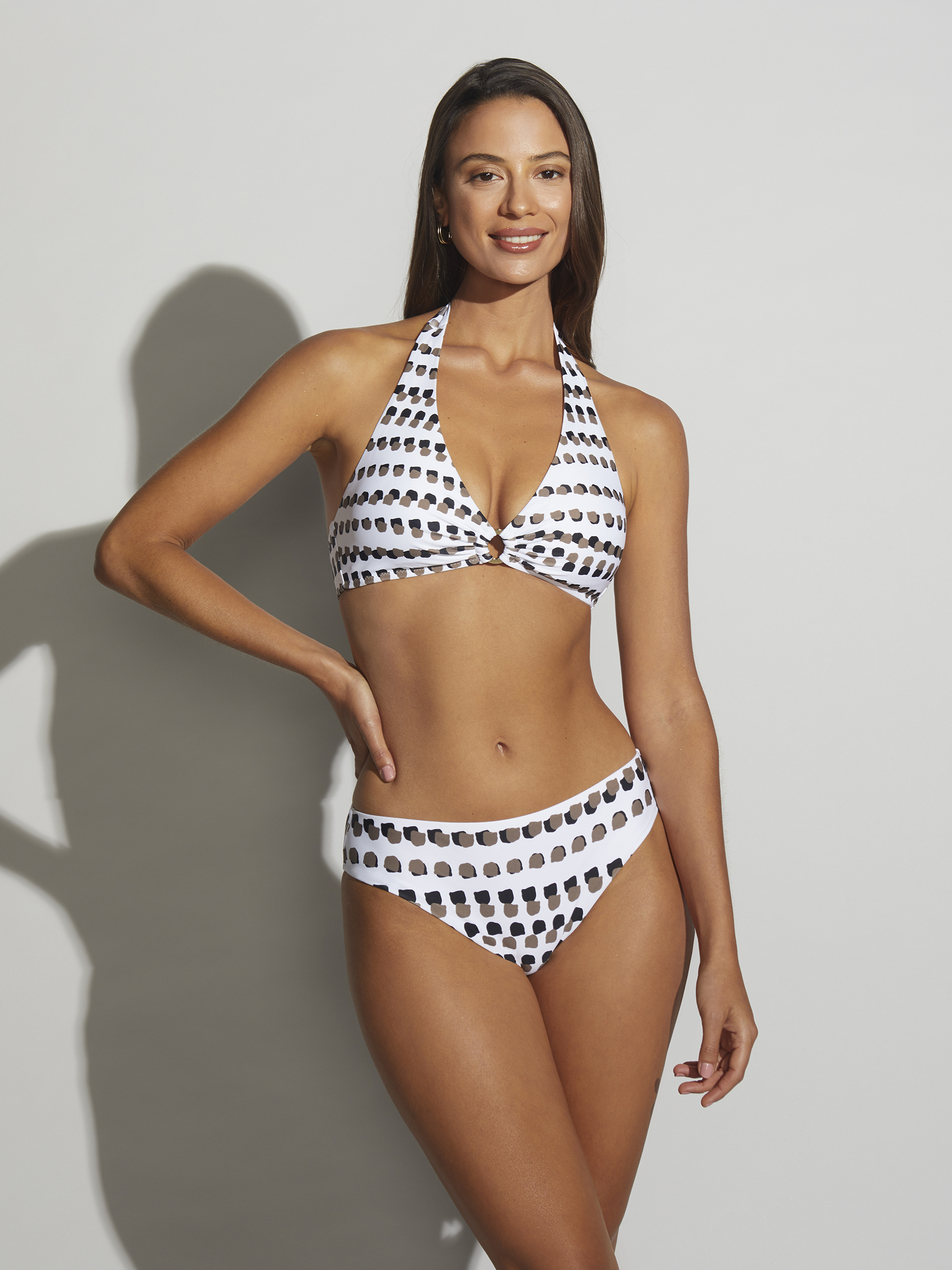
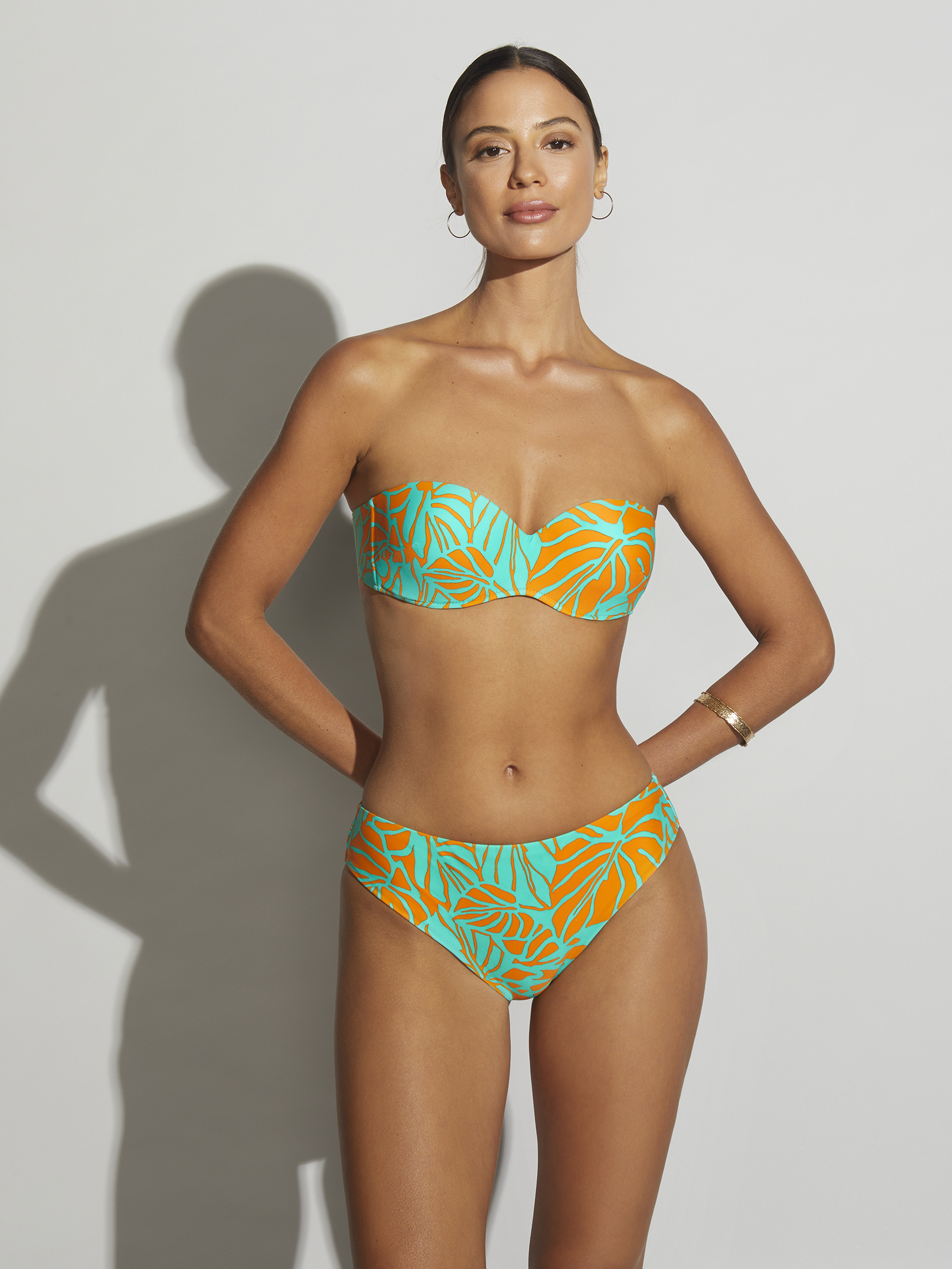
Bikini de triángulo con nudo central de Roidal, ideal para realzar el pecho

Bikini for a Small Chest: Designs That Enhance and Flatter

Choosing a bikini for a small chest is not about hiding your figure, but about finding designs that bring balance, visual volume and comfort. A well-chosen bikini for a small bust can help enhance the bust area with necklines, straps, fabrics, prints and small details placed strategically.

At Roidal, the key is to choose a piece that follows the body’s natural shape and makes you feel confident. It is not about transforming your figure, but about choosing a flattering, comfortable design that is consistent with your style.

What bikini flatters a small chest and why

If you wonder what bikini flatters a small chest, the answer is usually in the top. Tops with soft cups, light structure, gathers, bows, prints, discreet ruffles or central details help create a sense of volume in the bust without losing a natural look.

Designs that leave the shoulders bare or draw attention towards the neckline also work very well. To compare cuts and levels of support, you can browse the Roidal bikini tops and look at the cup shape, the position of the straps and the fit of the back.

Bikini for a small bust: triangle, bandeau and tops with detail

A bikini for a small bust can be especially flattering when the top has a defined shape. The triangle slims the torso and lets you adjust the separation of the cups, while the bandeau adds a horizontal line that can give the bust more visual presence.

If you want a light finish, you can go for a triangle bikini collection with prints or textures. If you prefer a cleaner look for sunbathing, bandeau bikini options are an elegant alternative, especially when they feature a central knot, gathering or inner cup.

Bikini for a Small Chest: Designs That Enhance and Flatter

Small chest bikini: details and bikinis to enhance the bust

Details make the difference in bikinis to enhance the bust. Prints placed on the top, bright colours, textured fabrics, trims, buckles or bows can make the upper part stand out subtly.

It is also worth looking at the direction of the lines. V necklines are slimming, thin straps add delicacy and decorative pieces in the centre of the top help direct the gaze towards the neckline. If you want to compare options, the guide to bikini top styles will help you identify which cut best suits the effect you are looking for.

What to avoid if you are looking for a bikini for women with a small chest

With bikinis for women with a small chest, it may be worth avoiding tops that are too flat, shapeless or made of very thin fabrics if the goal is to gain visual volume. Very closed necklines can also be less flattering when you want to give the bust more prominence.

Even so, there are no rigid rules. A bikini should adapt to your taste, your comfort and the plan you are going to use it for. What matters is that the garment fits well, does not shift and keeps a balanced proportion with the rest of your figure.

The best bikini for a small chest according to your style

The best bikini for a small chest will be different depending on the effect you want to achieve. If you are after a delicate look, the triangle can be a safe bet. If you prefer a more minimalist, sophisticated image, the bandeau can fit very well. If you want more support, look at models with cups, adjustable straps or a firm back.

You can also play with the contrast between top and bottom. A top with colour, a print or a striking detail and a simpler bottom helps to visually balance the figure. To make a more complete decision, you can check the guide on how to choose a bikini according to your style, comfort and needs.

Having a small chest does not limit your swimwear options. On the contrary: it lets you play with light tops, elegant necklines, triangles, bandeau, prints and details that enhance the bust naturally.

The key is to choose a bikini for a small chest that combines design, fit and comfort. At Roidal you will find options designed to follow your figure with elegance and help you feel good on every summer plan.

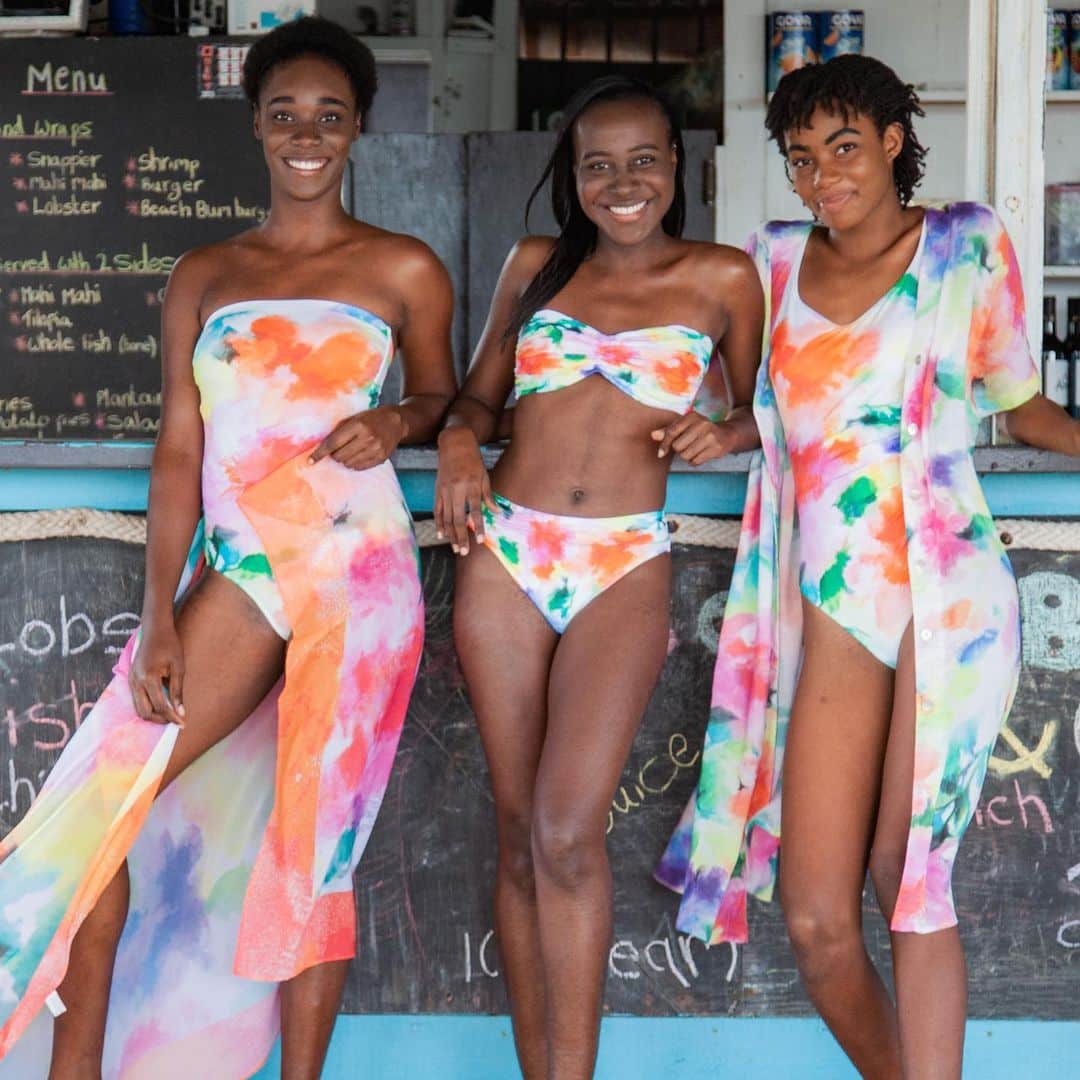
Modelos con bikinis y bañadores de Roidal en la playa, protegidas del sol con SPF 50

What Does SPF 50 Mean? Everything You Need to Know Before the Beach

Getting to the beach with the perfect bikini or swimsuit is only part of the plan. The other part, the one your skin will thank you for all summer long, starts with choosing your sunscreen well. That is why understanding what SPF 50 means helps you make better decisions before exposing yourself to the sun.

SPF 50 is one of the most common protection factors at the beach and the pool, but it is not always understood correctly. It does not mean you can stay in the sun for hours without reapplying the product; it indicates the level of protection against UVB radiation when used correctly.

What the sun protection factor is and how it is measured

SPF stands for Sun Protection Factor. This figure measures the protection a product offers against UVB rays, the main cause of sunburn.

When someone wonders what the sun protection factor is, the key is to understand that the number does not equal exact minutes of exposure. SPF compares how long the skin takes to redden with sunscreen versus how long it would take without it, always under controlled laboratory conditions.

In practice, that protection depends on applying enough product, spreading it evenly and reapplying it frequently. That is why a high SPF does not replace other care habits, such as seeking shade, wearing a hat or choosing comfortable swimwear to spend the day in the sun.

Sun protection factor 50: how much SPF 50 protects

Sun protection factor 50 filters approximately 98% of UVB radiation when applied correctly. This means it lets through only a very small part of the rays responsible for burns, although it does not block the sun 100%.

If you wonder how much SPF 50 protects, the real answer is: it protects a lot, but only if you use it well. You have to apply it before going out in the sun, cover all exposed areas and reapply it every two hours or after every swim.

For a full day, it also helps to choose garments and accessories that add comfort. A light sarong or a beach dress can help you cover up between swims and reduce direct exposure during the sunniest hours.

Difference between SPF 30 and SPF 50: what really changes

The difference between SPF 30 and SPF 50 may seem small if we only look at percentages. An SPF 30 filters around 97% of UVB rays, while an SPF 50 filters close to 98%. However, that difference can be relevant during long exposures or when application is not perfect.

At the beach and the pool, protection usually drops due to water, sweat, rubbing with the towel and the amount applied. That is why many people prefer SPF 50 to have a greater margin, especially in summer or on days with a high UV index.

What Does SPF 50 Mean? Everything You Need to Know Before the Beach

When to use SPF 50 at the beach or the pool

Knowing when to use SPF 50 is key. In general, it is recommended for days at the beach, the pool, on a boat, long walks in the sun or any plan where exposure will be intense or prolonged.

It is also especially useful on fair skin, skin with dark spots, scars, recent dermatological treatments or sensitive areas such as the face, neckline, shoulders and the top of the feet. Even if your skin tans easily, accumulated sun damage can appear over time.

If you are planning a getaway, you can get inspired with this selection of beaches and choose both the destination and the right protection to enjoy it safely.

Mistakes that reduce the effectiveness of SPF 50

Choosing a good sunscreen is not enough if it is applied badly. One of the most common mistakes is using too little. If you apply less product than recommended, the real protection can be much lower than the figure on the bottle.

Another common mistake is not reapplying. Water, sweat and rubbing remove part of the sunscreen, even if the product is water resistant. It is also a good idea to check the expiry date and avoid leaving the bottle in the sun for hours, because heat can alter the formula.

In addition, there are areas that are often forgotten: ears, neck, neckline, shoulders, the top of the feet and the back of the legs. These are very exposed areas when you wear a bikini or swimsuit and can burn easily.

SPF 50, swimsuits and bikinis: how to pack your beach bag well

Sun protection works best when it is part of a complete routine. Sunscreen, hydration, shade, sunglasses and a comfortable swimsuit make the day more pleasant and safe.

If you are going to spend many hours outdoors, choose quality fabrics, garments that do not chafe and designs that let you move comfortably. You can combine an SPF 50 sunscreen with Roidal swimsuits or with a bikini that adapts well to your beach plan.

How to care for your swimwear after using SPF 50

Sunscreens can leave residue on the fabric, especially when combined with salt, chlorine or sweat. To keep the garment in good condition, rinse it with cold water after every use and avoid leaving it damp inside your bag for hours.

It is also advisable to wash the garment by hand, without rubbing too much, and let it dry in the shade. If you want to expand on this care, you can read the tips to extend the life of your bikinis and swimsuits.

In short, SPF 50 means high protection against UVB radiation, but not absolute protection. For it to work well, you have to apply it in sufficient amount, reapply it every two hours and combine it with responsible habits during sun exposure.

Before going to the beach, check your sunscreen, prepare your swimwear and add accessories that help you stay comfortable all day long. Caring for your skin and enjoying summer can go perfectly hand in hand.

Bañador favorecedor que disimula la barriga

Swimsuits That Hide the Belly: Keys to Choosing the Most Flattering One

Choosing a swimsuit when the belly is an area you want to soften should not be a frustrating process. With the right cuts, the right fabrics and a few strategic details, it is perfectly possible to find swimsuits that hide the belly and flatter the figure without giving up style.

At Roidal, the aim is not to hide the body, but to choose a piece that follows the figure with comfort, confidence and elegance. If you want to start with a versatile option, browse the women’s swimsuit collection and look at the cuts, necklines and fabrics.

A Swimsuit to Hide the Belly: Why the Cut Is Decisive

Before talking about colours or prints, it helps to understand that the cut of the swimsuit is what most influences how the abdominal area is perceived. A swimsuit to hide the belly should gather without squeezing, shape the silhouette gently and create visual lines that lengthen the torso.

Front draping, crossover panels and V-necklines tend to work very well because they break up the horizontal line of the abdomen and draw attention up towards the top. Patterns that support the bust and visually balance shoulders, waist and hips also help.

Swimsuits to Hide the Belly: Fabrics That Shape Without Squeezing

Swimsuits to hide the belly do not depend on the outer design alone. The fabric is key for the piece to keep its shape, avoid stretching out with use and give a comfortable feeling of support.

A quality blend of polyamide and elastane offers stretch, resistance and good recovery. This lets the swimsuit adapt to the body without marking it too much. If you want to go deeper into this, you can check the guide on types of fabrics for swimwear and understand which materials work best in swimwear.

Swimsuits That Hide the Belly: Keys to Choosing the Most Flattering One

A Swimsuit to Hide the Tummy: Colours and Prints That Flatter

Colour can also help when you’re looking for a swimsuit to hide the tummy. Dark tones, side panels, prints placed on the upper part and designs with contrast can create a more streamlined visual effect.

It doesn’t mean you have to stick to black. Floral, geometric or tropical prints can also flatter if they are well distributed. The key is for the pattern to follow the shape of the swimsuit and not concentrate all the attention on the abdomen.

Plus-Size Swimsuits to Streamline the Silhouette

If you need more coverage, more support or sizes from a UK 20 upwards, plus-size swimsuits can be an especially comfortable option. What matters is that the pattern is designed to support well without stiffening the garment or limiting movement.

A good plus-size swimsuit should keep the same attention to design as any other piece: flattering necklines, comfortable straps, hard-wearing fabrics and careful finishes. In this case, Roidal’s plus-size swimsuit collection can help you find styles with the right fit and look.

A Bikini to Hide the Belly: An Option That Can Work If You Choose Well

Although many women think first of a one-piece, a bikini to hide the belly can also work if it is chosen well. The key is usually in the bottom: a high-waisted brief, with a good fit and firm fabric, can cover the lower abdomen and streamline the waist.

It also helps to pair a simple bottom with a top that draws attention towards the neckline or shoulders. If you prefer this format, you can explore Roidal’s bikinis and compare cuts, colours and levels of coverage.

How to Choose the Best Swimsuit to Hide the Belly for Your Figure

The best swimsuit to hide the belly is not the same for every woman. If you want to lengthen the torso, V-necklines and vertical cuts can help. If you want to soften the abdomen, draping and crossover panels tend to be a good option. If you prioritise coverage and comfort, a design with wide straps and firm fabric may be more practical.

Size is also essential. A swimsuit that is too small can mark the abdominal area more, while one that is too large loses support. Before choosing, check Roidal’s size guide and take current measurements of bust, waist and hips.

How to Care for Your Swimsuit So It Keeps Flattering You

A quality swimsuit can last you several seasons if you look after it well. After every swim, rinse it in cold water to remove chlorine, salt and sun cream. Avoid wringing it hard and let it dry in the shade.

This care helps preserve the stretch, the colour and the support of the fabric. If you want more recommendations, you can read the tips to extend the life of your bikinis and swimsuits.

Feeling good in a swimsuit does not depend on having a particular figure, but on finding a piece designed to follow you. Swimsuits that hide the belly combine cut, fabric, colour and fit to flatter without being uncomfortable.

At Roidal you’ll find swimsuits, bikinis and plus-size designs made to enjoy summer with elegance, comfort and confidence.

Bikini premamá con buena sujeción para el embarazo

Maternity Bikinis: The Best Styles to Enjoy Summer

Pregnancy is one of the most special times in a woman’s life, and that also shapes the way you experience summer. Feeling comfortable, confident and flattered at the beach or the pool is not a luxury: it is a real need. Maternity bikinis help adapt swimwear to a changing body without giving up style or quality.

Unlike a conventional bikini, a maternity bikini has to follow the growth of the belly, offer more support across the bust and avoid any unnecessary pressure. If you’re looking for an elegant option for this stage, you can start by browsing Roidal’s bikini collection and considering which cuts suit you best.

Why Maternity Bikinis Differ from a Conventional Bikini, and How

A standard bikini is designed with a more stable body in mind. During pregnancy, the belly grows in volume, the bust may increase and the skin becomes more sensitive. That is why maternity bikinis should prioritise the fit, the stretch and your freedom of movement.

The difference lies in the small details: tops with better support, adjustable straps, fabrics that adapt without squeezing and bottoms that do not press on the abdominal area. These features let you enjoy the water with more comfort and confidence.

To choose the top well, it helps to compare different bikini top styles and look at the level of support, the shape of the cup and whether the straps can be adjusted.

A Maternity Bikini with Good Support: How to Choose the Top

The top is one of the most important pieces in a maternity bikini. During pregnancy, the bust can change size and become more sensitive, so the top needs to support without compressing.

Tops with wide or adjustable straps tend to be a comfortable choice, because they let you adapt the piece to each moment. Designs with a soft cup, a flexible structure or wrap-around necklines can also work well. If you want more adjustment options, look through the bikini tops and prioritise styles that do not dig into your shoulders or back.

Maternity Bikinis: The Best Styles to Enjoy Summer

Bottoms for Maternity Bikinis: Comfort for the Belly

When people talk about maternity bikinis, attention often goes to the top and the bottom is forgotten. Yet the bottom is key for the piece to stay comfortable over several hours.

Higher-rise bottoms, adjustable sides and elastic fabrics help the piece adapt to the belly without marking it. It is also useful to choose a bikini set that lets you mix different sizes on top and bottom, which is very practical when the body changes at different rates.

Fabrics and Sizes in the Best Maternity Bikinis

The best maternity bikinis combine hard-wearing fabrics, a soft feel and good recovery. The piece needs to stretch, but also return to its shape after a swim. That is why the quality of the fabric matters as much as the design.

Before buying, measure your bust, waist and hips at the current point of your pregnancy. Going up a size is not always enough: sometimes it is better to check a size guide to find an option that fits well without being loose or too tight.

Style in Maternity Bikinis: Colours, Prints and Accessories

A maternity bikini does not have to be basic or understated. Flattering colours, elegant prints and small design details can help you feel more confident and reflect your personal style.

Prints create visual movement, bright tones bring freshness and designs with detail on the top balance the silhouette. To complete the look, you can pair your bikini with a sarong or with light beach dresses, especially if you want comfort between a swim and a walk.

How to Care for Your Maternity Bikinis So They Last Longer

During pregnancy it is common to wear a piece more often when it feels comfortable, so it is worth looking after it well. After every swim, rinse the bikini in cold water to remove chlorine, salt or sun cream. Avoid wringing it hard and let it dry in the shade.

This care helps keep the fabric’s stretch and the shape of the top for longer. If you want more recommendations, you can read the tips to extend the life of your bikinis and swimsuits.

In Short: Choose a Comfortable, Flattering, Quality Maternity Bikini

Finding the right maternity bikini does not depend on size alone. The support, the fabric, the shape of the bottom, the design of the top and how it makes you feel all matter too.

The best choice will be the one that lets you enjoy summer with comfort, confidence and style. At Roidal you’ll find bikinis designed to accompany you elegantly on every beach or pool plan.

Beach Dresses for Women: How to Choose the Ideal Design for Every Plan

Beach Dresses for Women: How to Choose the Ideal Design for Every Plan

Some pieces pull a summer look together with no effort at all, and beach dresses for women are one of them. You slip one over your bikini or swimsuit, step off the sand, go for a drink or head down to the pool, and you still feel comfortable, put together and light. They do not have the stiffness of a regular dress, yet they never look like a last-minute fix.

The trick is choosing well. Not all women’s beach dresses work the same way or flatter in the same way. The fabric, the length, the neckline, how sheer it is and the way you pair it with your swimwear completely change the result. One dress can be perfect for a stroll along the shore and fall short for lunch by the sea; another can look too dressy for the pool but ideal for a beach club or an afternoon walk.

In this guide you’ll find how to choose beach dresses for women based on the plan, the style of your bikini or swimsuit and the kind of look you want to create.

Why Beach Dresses Are Summer's Ultimate All-Rounder

Beach dresses have one very clear advantage: they turn a swimwear look into a complete outfit in seconds. You do not need to change, overthink it or carry several pieces around. You just choose a design that works with your swimsuit or bikini and has the right drape to move comfortably.

They also add coverage without losing that airy feel. In summer you do not always want tight garments or heavy fabrics, but you may want to feel a little more dressed when you leave your sunlounger, walk into a casual restaurant or head along the seafront. That is exactly where a well-chosen beach dress makes the difference.

They also let you play with very different styles. You can wear a short, light dress for a relaxed plan, a long, flowing one for a more elegant look, or a loose tunic if you want something practical and easy to throw on. What matters is that the piece suits the moment rather than feeling forced.

Discover Roidal’s selection of beach dresses to inspire you with designs made to pair with your swimwear.

How to Choose Women's Beach Dresses for Each Plan

Before you focus only on the print or the colour, think about where you’ll be wearing it. It sounds like a minor detail, but it helps enormously. A dress for popping down to the pool does not have to be the same as one for lunch at a beach bar or a walk along the promenade with sandals and a basket bag.

For the pool or a quiet beach day, light dresses in fresh fabric with a comfortable cut work really well. They do not need to be too structured. In fact, the easier they are to slip on and off, the better. Short designs, tunics, loose dresses or pieces with openings that do not cling to the body tend to fit here.

For plans that carry on after your swim, it is worth looking for something a touch dressier. A midi or long length, a more fluid drape or a considered neckline can make the outfit feel more elegant while still being summery. In these cases, the dress should cover enough for you to feel comfortable away from the sand, without losing its lightness.

For holidays, the ideal is to pack at least one versatile dress. The kind you can wear in the morning over your swimsuit, in the afternoon with flat sandals and in the evening for a casual plan. The best beach dress is the one that adapts to more than one moment without looking out of place.

Short Beach Dresses: When to Choose Them

The short dress is the most practical option for everyday beach life. It is fresh, takes up little space in your suitcase and is very comfortable when you’ll be moving a lot: heading into the sea, sitting on the sand, in and out of the pool or walking in the heat.

It is especially flattering when you want a relaxed look. It pairs beautifully with bikinis, flat sandals and raffia or fabric bags. If the fabric has some movement, the result looks more polished; and if the cut is not too fitted, it will be far more comfortable when your body is still damp or covered in sun cream.

A short dress also works well when the bikini or swimsuit already takes centre stage. If you are wearing a bold print, a simple beach dress in an easy-to-combine colour helps balance the look. If your swimwear is plain, you can go for a dress with a print, texture or a special detail.

The idea is not to cover up completely, but to dress the look naturally. That is why it is best to avoid designs that are too stiff or fitted: they can be less comfortable and lose that relaxed feel a beach piece calls for.

Elegant Beach Dresses for Lunch, a Walk or a Beach Club

When the plan goes beyond sunbathing, elegant beach dresses are a safe bet. They do not have to be formal or over the top; they just need a lovely drape, a flattering length and a design that complements your swimwear.

Long or midi dresses add that more sophisticated touch without complicating the look. They work especially well with one-piece swimsuits, because the outfit comes close to a full summer dress. If the swimsuit has a clean neckline, fine straps or a special print, the dress can act as a light layer and let the design show through without stealing the spotlight.

You can also choose a dress with a slit, a V-neck or adjustable straps if you want a more streamlined effect. Elegance on the beach usually lies more in the drape and the simplicity than in the embellishments. A pleasant fabric, a flattering colour and a comfortable cut tend to work better than too many details.

To round off this kind of look, you can pair it with other beach accessories such as sarongs, tunics or light pieces that keep to the same colour palette.

Beach Dresses for Women: How to Choose the Ideal Design for Every Plan

How to Style Women's Beach Dresses with a Bikini

Women’s beach dresses pair really well with a bikini because they let you play with layers. The bikini stays as the base of the look and the dress adds coverage, movement and a dressier touch whenever you need it.

If you are wearing a printed bikini, look for a dress that does not compete with it. It can be plain, in a neutral tone or in a colour that already appears in the print. That way the outfit looks intentional rather than busy. If the bikini is plain, the dress can have more presence: a print, texture, cut-outs or a bolder colour.

The shape of the bikini matters too. A bandeau bikini pairs beautifully with fine-strap dresses or wide necklines, because it keeps a clean line up top. A triangle bikini takes looser dresses, V-necks or flowing fabrics. If the top has a lot of detail, it is better to choose a simpler dress.

In the bikini collection you can find inspiration for balanced combinations: a statement bikini with a more neutral dress, or a simple bikini with a more special dress.

How to Wear Beach Dresses with a Swimsuit

With a swimsuit, a beach dress can create a very elegant look. A one-piece has more visual structure than a bikini, so it works as a perfect base for light dresses, long flowing pieces or open tunics.

If the swimsuit is plain, you can choose a dress with a print or texture to give the outfit more life. If the swimsuit already has a striking design, a simple dress will be enough. The aim is for the two pieces to complement each other, not compete.

Dresses with an open neckline, buttons, side slits or a semi-sheer fabric work especially well over a swimsuit because they let part of the design show without revealing too much. The result is comfortable, summery and far more ready for plans out of the water.

If your plan involves lunch, a walk or moving around the hotel’s common areas, a swimsuit paired with a flowing beach dress can be one of the easiest ways to look put together without changing.

Fabrics, Lengths and Details Worth Checking

When choosing women’s beach dresses, the fabric is almost as important as the design. A good fabric should be fresh, pleasant to the touch and drape without staying stiff. It also helps if it is not too heavy and dries easily when you wear it near the water.

Flowing fabrics tend to be more flattering because they do not cling to the body and move with you. For the beach or pool this really shows: a dress that falls well looks more elegant even when it is simple. A fabric that is too stiff, on the other hand, can make the whole outfit look less natural.

The length also changes how you use it. Short dresses are more practical for active plans; midi lengths balance comfort and elegance; long ones add a more sophisticated touch. There is no single right option, just the right piece for each moment.

Pay attention to the functional details too: adjustable straps, buttons, slits, comfortable necklines or roomy cuts. A beach dress should be beautiful, but also easy to wear over your swimwear.

Beach Dresses: Mistakes Worth Avoiding

One of the most common mistakes when choosing dresses for the beach is picking a design too similar to a regular street dress. It may look good in a photo, but it becomes uncomfortable if the fabric is heavy, creases too much or does not let you move easily.

Another mistake is not thinking about the swimwear you’ll wear underneath. If the dress has a very specific neckline and the bikini does not match, the outfit can look messy. That is why it helps to try the combinations before packing them.

It is also worth avoiding sheer fabrics that feel awkward away from the sand. It is one thing for the fabric to be light and hint at your swimwear; quite another to feel uncomfortable walking into a restaurant or through a common area.

Finally, do not choose on trend alone. Beach dresses get a lot of wear in summer, so it is worth prioritising cuts and colours that suit you. If you feel like yourself, you’ll wear it more.

Alternatives to the Beach Dress If You Want More Versatility

Although the dress is a very complete option, it is not the only one. Sarongs, tunics and other accessories can help you create different looks with the same swimwear.

The beach sarong is perfect if you want a truly versatile piece: you can wear it as a skirt, an improvised dress or a light shawl. It takes up little space, adapts to different bodies and lets you change the look in seconds. Learn how to wear a sarong with this step-by-step tutorial and get more out of a single piece.

Beach cover-ups are ideal if you want something easy to slip on, with comfortable coverage and a relaxed style. They work really well over a swimsuit and with a bikini too, especially when you want a loose, practical piece.

The clever thing is to combine several pieces depending on the trip. A dressier dress, a versatile sarong and a comfortable cover-up can handle almost every summer plan without overfilling your suitcase.

Which Beach Dress Is the Most Flattering?

The most flattering dresses tend to have a good drape, a light fabric and a cut that does not cling too much to the body. Long, flowing ones are very streamlining, while short ones are fresher and more practical for everyday wear.

Which Beach Dresses Are Best with a Bikini?

With a bikini, short dresses, tunics and loose designs work really well. If the bikini is printed, choose a simpler dress; if the bikini is plain, you can go for a dress with more colour or texture.

Can I Wear a Beach Dress with a Swimsuit?

Yes. In fact, a one-piece swimsuit pairs really well with beach dresses because it creates a more structured base. Long, midi or open dresses add an elegant touch without losing comfort.

What Is the Difference Between a Beach Dress and a Summer Dress?

A beach dress is usually designed to be worn over swimwear: lighter fabrics, comfortable cuts, easy to put on and take off, and designs that work with a bikini or swimsuit. A summer dress can be more structured and is not always practical near the water.

What to Pack: Dress, Sarong or Cover-Up?

The ideal is to combine at least two options. A beach dress works for more complete looks, a sarong adds versatility and a cover-up is perfect for covering up quickly and comfortably.

The Ideal Beach Dress Is the One That Fits Your Summer

Choosing beach dresses for women is not only about picking a pretty design. It depends on how you’ll use it: whether you want something practical for the pool, an elegant look for lunch by the sea or a versatile piece for several days of holiday.

The key is to look for light fabrics, comfortable cuts and designs that pair well with your bikinis and swimsuits. When the dress fits your plan, the whole look feels more natural: comfortable, flattering and with that considered touch that makes dressing in summer so much easier.

How to Wear a Beach Sarong: Easy, Elegant Ways to Style It

How to Wear a Beach Sarong: Easy, Elegant Ways to Style It

Some pieces seem simple until you stand in front of the mirror and try to style them. A sarong is one of them. You pack it in your suitcase, it takes up hardly any space, it goes with almost everything, and yet the same question often comes up: how to wear a sarong so it looks beautiful, comfortable and natural, without feeling like a last-minute knot.

The good news is that a beach sarong is far more versatile than it looks. It can become a skirt, a dress, a light top, a shawl or an easy cover-up for walking from the sun lounger to the beach bar without changing your whole outfit. The key is choosing the right fabric, mastering two or three basic knots and adapting the way you wear it to the plan of the day.

In this guide, you’ll find easy, elegant ways to wear a sarong, with clear steps so you can try them at home before heading to the beach.

Why the Sarong Is Still Summer's Most Versatile Beach Accessory

A sarong does something many other beachwear pieces cannot always do: it solves several situations with a single piece. It covers the hips when you come out of the water, creates a more dressed look in seconds and gives you light protection from the breeze when you do not want to put on anything heavier.

Unlike other accessories, it does not require an exact size. The same sarong can sit higher or lower, be tied at the side, crossed around the neck or draped over the shoulders depending on the effect you want. That is why it works so well with bikinis, one-piece swimsuits and beach outfits in very different styles.

It also adds movement. A lightweight sarong moves with you, falls naturally and gives swimwear that fluid touch that makes the whole look feel more considered. If you choose a design with good fabric and a flattering drape, you do not need much else to complete the outfit.

How to Wear a Beach Sarong as a Skirt

The most classic way to wear a sarong is as a skirt. It is comfortable, quick and works with practically any bikini or swimsuit. It also lets you adjust the amount of coverage depending on the moment: shorter for walking along the beach, longer for going to lunch or more fitted if you want to define the silhouette.

To do it, open the sarong behind your waist and hold one end in each hand. Bring both ends forward, cross the fabric slightly over your hip and tie a side knot. If you want a more streamlined effect, place the knot to one side instead of centring it. A side knot creates a very flattering diagonal line and prevents the fabric from looking stiff.

If you want a shorter skirt, fold the sarong in half before putting it on. This option is ideal with a high-waisted bikini or a clean-cut one-piece swimsuit. If you prefer a more elegant version, leave it full length and tie it at the waist, allowing the side opening to move naturally with your leg.

If the sarong slips too much, twist the ends slightly before tying them. The fabric gains grip and the knot feels more secure without needing to tighten it too much.

How to Tie a Sarong So It Feels Secure and Flattering

Knowing how to tie a sarong is almost more important than the style you choose. A knot that is too loose moves when you walk; one that is too tight creates unnecessary bulk and can feel uncomfortable when you sit down. The ideal point is somewhere in between: firm, but without stretching the fabric.

The simple knot is the easiest. Bring the two ends together, cross them and tighten gently. It works well for a short skirt, long skirt, or side-tied sarong. If the fabric is very fine, you can add a small second knot for extra hold, but without creating too much volume.

The rolled knot looks cleaner visually. Before tying the knot, lightly roll the ends of the sarong around themselves. This makes the closure narrower and neater, especially when you wear it at the waist or across the chest.

The hidden knot is perfect if you want a more polished finish. It consists of tying the ends on the inside, letting a layer of fabric fall over the top to conceal the closure. It is a good option for wearing the sarong as a long skirt on a walk or for an informal lunch by the sea.

How to Wear a Sarong as a Dress

One of the most practical ways to wear a sarong is to turn it into a dress. It is a quick solution when you leave the beach, want a little more coverage or need a light look for walking along the seafront without losing comfort.

To create a strapless dress, place the sarong behind your back, bring the ends up to your chest and tie them at the front. Then adjust the fabric so it covers the bust properly and falls straight over the body. This style is especially flattering with wide sarongs and fabrics with a good drape because it creates a clean vertical line.

If you prefer a halter dress, place the sarong behind your body, cross the two ends in front of your chest and bring them up to the nape of your neck. Tie them behind the neck and adjust the fabric so it does not pull. This style highlights the shoulders and works especially well with plain swimsuits or bikinis with simple lines.

Another very flattering option is the wrap dress. Place the sarong across your back, cross the ends in front and bring them behind you to tie them at the waist. The result lightly defines the silhouette without feeling too tight, making it comfortable and elegant at the same time.

If you like switching between a sarong and a dress depending on the plan, you can also pair it with lightweight beach dresses to have more dressed-up options when you leave the sand.

How to Wear a Sarong as a Long Skirt

The long skirt is the most elegant version of the sarong. It adds movement, gives more coverage, and creates a very flattering effect when the fabric falls well. It is a good choice for going from the hotel to the beach, having a drink after a swim or elevating a simple bikini without adding too many layers.

To achieve it, use the sarong unfolded. Place it behind your waist, bring the ends to one side and tie a knot at the height that feels most comfortable. If you want to visually lengthen the leg, leave a soft side opening. It does not need to be too pronounced: it is enough for the fabric not to fall completely closed.

If the sarong is very wide, you can cross one end in front of the body before tying it. This creates a wrap effect, similar to a wrap skirt, that looks especially good with flat sandals, a basket bag and sunglasses.

A long sarong skirt pairs very well with structured bikini tops, bandeau tops or straight-neck swimsuits. The balance lies in letting the sarong be the piece with movement and keeping the rest of the look cleaner.

How to Wear a Beach Sarong: Easy, Elegant Ways to Style It

How to Wear a Short Sarong for a More Comfortable Look

A short sarong is perfect if you want something quick, fresh and easy to wear. It is not designed to cover too much, but to add comfort when moving around the beach, sitting on the sand, or going to get a drink without fully dressing the look.

To do it, fold the sarong horizontally until you get the length you want. Then place it around your hips and tie it to one side. You can wear it lower on the hips for a relaxed effect, or higher at the waist if you want to define the silhouette more.

This style works especially well with bikinis because it lets the top of the set show and keeps a very summery feel. If you want a more balanced result, pair a printed sarong with a plain bikini, or the other way around: a printed bikini with a sarong in a neutral shade.

To complete the outfit, you can play with other beach accessories such as tunics, light dresses or accessories that stay within the same colour range.

How to Wear a Sarong with a Bikini or Swimsuit

A sarong is not worn in exactly the same way with a bikini as it is with a swimsuit, and understanding that difference helps the whole outfit work. With a bikini, the sarong usually acts as a balancing piece: it covers the lower half, adds movement and lets the top take centre stage.

If you are wearing a triangle or bandeau bikini, a long sarong skirt creates a very elegant contrast. If the bikini has a strong print, choose a more understated sarong. If the bikini is plain, you can go for a sarong with more colour, texture or pattern.

With a swimsuit, the sarong can create an almost dress-like look. A one-piece swimsuit combined with a long sarong tied at the waist feels more sophisticated and is very flattering for beach plans that continue out of the water. In this case, side knots and fluid drapes work particularly well.

If you want to build a complete look, always think about proportions. A bikini with clean lines can handle a more statement sarong; a swimsuit with a striking neckline or print calls for a simpler sarong.

Common Mistakes When Wearing a Sarong

Although a sarong is easy to wear, there are a few mistakes that can make the result look less polished. The first is choosing a fabric that is too stiff. If the fabric does not fall well, the knots look bulky and the sarong loses movement.

Another common mistake is tightening the knot too much. A sarong should hold, but not compress. If you tie it too tightly, the fabric wrinkles, marks the waist and becomes uncomfortable when walking or sitting down.

It is also worth avoiding a sarong that competes with the rest of the look. If you are wearing a very printed bikini or swimsuit, choose a cleaner sarong. If your swimwear is understated, you can use the sarong to add colour or texture.

Finally, not every knot works for every plan. A high, tight knot can work well for walking, but it may be uncomfortable if you are going to spend a lot of time sitting down. Before you leave, test how the sarong behaves when you move, sit and stand up.

How to Choose the Right Sarong

For a sarong to look good, knowing how to tie it is not enough. The fabric, size and design directly influence the result. A sarong that is too small limits the ways you can wear it; one that is too stiff does not fall naturally; and one with a print that is hard to combine will be worn less than expected.

Size comes first. If you only want to wear it as a short skirt, you do not need a particularly large piece. But if you also want to use it as a dress, long skirt or shawl, choose a wide sarong that lets you play with the fabric.

Drape is just as important. Lightweight, soft fabrics with movement work better for side knots, wrap dresses and long skirts. They also take up little space in your suitcase and dry easily, which is very practical on holiday.

When it comes to colour, think about the swimwear you usually wear. A sarong in neutral tones goes with almost everything; a printed one can become the main piece of the look. If you want to go deeper into this piece, we explain what a sarong is and how to choose the perfect one to help you get it right.

Other Ways to Wear a Sarong as an Accessory

A sarong does not have to be limited to the waist. It can also work as a shawl over the shoulders when evening falls, as a large scarf to protect you from the sun or even as a decorative piece over a sun lounger.

One simple way to wear it is open over the shoulders, like a light cape. It does not provide much warmth, but it adds coverage and looks very elegant over a one-piece swimsuit. You can also tie it at the front, at chest height, to create an informal kimono effect.

Another option is to use it as a top. Fold the sarong into a band, place it around the bust and tie it at the back. If the fabric is wide, you can cross it at the front before tying it for extra support. It is a useful alternative when you want to improvise a beach look with a skirt or fluid trousers.

If you prefer a ready-made piece with that same relaxed effect, beach cover-ups are a comfortable option for covering up without losing lightness.

How Do You Wear a Beach Sarong Easily?

The easiest way is to wrap it around your waist and tie a side knot. You can wear it long or fold it to create a short skirt. It is quick, comfortable and works with almost any bikini or swimsuit.

How Do You Wear a Sarong as a Dress?

Place the sarong behind your back, bring the ends to your chest and tie them at the front for a strapless dress. If you prefer a halter effect, cross the ends at the front and tie them behind your neck.

How Do You Tie a Sarong So It Does Not Fall Down?

The best option is to make a firm knot, but not an excessively tight one. If the fabric slips, lightly roll the ends before tying them or add a small second knot for extra hold.

Which Sarong Is the Most Flattering?

Sarongs with a good drape and a generous size tend to be the most flattering because they allow you to create long skirts, wrap dresses and side knots without the fabric looking stiff. Tones that work with your bikini or swimsuit also help create a more harmonious look.

Can You Wear a Sarong Away from the Beach?

Yes, especially if you wear it as a long skirt, light dress or shawl over the shoulders. For informal summer plans, a well-tied sarong can work as an elegant and comfortable accessory.

The Sarong: A Simple Piece That Changes the Whole Look

Learning how to wear a sarong does not require a complicated technique, only trying different styles until you find the ones that suit you. As a short skirt, long skirt, halter dress, strapless dress or light shawl, the sarong can transform a swimwear look in seconds.

The key is choosing a pleasant fabric, making clean knots and adapting each way of wearing it to the plan: beach, pool, walk or lunch by the sea. With a single piece, you can gain comfort, style and versatility throughout the summer.

Maternity Swimsuit: How to Choose the Best One During Pregnancy

Maternity Swimsuit: How to Choose the Best One During Pregnancy

Pregnancy reshapes your body in a way that no ordinary garment is really built to follow — and that includes your swimsuit. If summer is approaching and your bump is growing week by week, finding the right maternity swimsuit isn’t about vanity. It’s a decision that has a direct effect on your comfort, your freedom of movement and how you feel in the water.

The good news is that there are designs made specifically to work with every stage of pregnancy, and maternity swimwear today holds its own against any other seasonal collection. Here’s everything you need to know to get it right.

Why an Ordinary Swimsuit Isn't Enough During Pregnancy

It comes down to the fabric and the cut. A regular swimsuit is designed around a stable silhouette, one where the bust and waistline don’t change much. In pregnancy, both shift constantly and gradually — which is why a swimsuit that fitted beautifully in your first trimester can feel tight, restrictive or simply uncomfortable by the third.

A swimsuit made for a growing bump needs fabric with well above-average stretch: one that can give without losing its shape and bounce back after every wear. Cheaper fabric gives up within weeks, and once it does you’re left with chafing, poor support and that tight, pinched feeling across sensitive areas like the bust or the belly.

Maternity swimwear also has to deliver genuine bust support, because your chest gains volume during pregnancy and needs more holding than usual. Rigid underwiring or hard, narrow straps can be genuinely uncomfortable — whereas a design built to move with you and support without squeezing makes an enormous difference over a full day.

What to Look for in a Comfortable Maternity Swimsuit

It helps to know exactly what you’re looking for before you start. Not every swimsuit marketed as “pregnancy-friendly” actually ticks the boxes that matter. These are the ones that do:

  • Four-way stretch. The fabric needs to give in every direction so it can follow your bump as it grows, without pulling or feeling tight anywhere.
  • Bust support with no underwiring. Underwires press on areas that become far more sensitive during pregnancy. Look instead for soft cups, reinforced straps or a wide underband — support that holds without digging in.
  • No raised seams across the belly. Flat seams, or no seams at all over the abdomen, prevent the rubbing that irritates skin already stretched and far more reactive than usual.
  • Chlorine- and saltwater-resistant fabric. Pregnancy often means more pool time as well as beach days. A quality fabric stands up to chlorine and salt without going baggy or losing its colour.
  • Adjustable fit. Since your shape keeps changing month to month, swimsuits with adjustable straps or wrap-style cuts will stay wearable for far longer.

Types of Adaptable Maternity Swimsuit

There’s no single maternity swimsuit that works for everyone. The right one depends on your trimester, on what you’ll be doing in it — pool sessions, beach days, hydrotherapy — and on how much coverage you personally want.

One-Piece with a Roomy Front Panel

This is the most versatile option, and the one most often recommended for the second and third trimesters. A one-piece swimsuit with a wide, stretchy front panel holds and covers your bump without pressing on it, so you keep complete freedom of movement. It also covers the lower back, which tends to take on extra strain as pregnancy progresses.

Crossover or Adjustable Neckline

A crossover neckline spreads bust support evenly instead of concentrating the pressure in one place. It’s a common feature in women’s swimsuits that balance function and design, and it has an extra advantage: the crossover adapts to different bust sizes, so you’re less likely to need a new size as you change.

Maternity Swimsuit: How to Choose the Best One During Pregnancy

Side-Draped Swimsuit

A side-draped swimsuit does more than look good: the gathering softens volume at the sides and rebalances the silhouette visually, which is very flattering during pregnancy. This finish, common in shaping swimsuits, also stops the fabric from clinging across the bump, because the extra material falls naturally instead of stretching flat.

High-Waisted Two-Piece with a Sports Top

One-pieces are usually the easier choice, but plenty of women prefer a two-piece with a high-waisted bikini bottom that covers the bump. If you go this route, the top has to offer real support, and the bottoms should sit above your navel so nothing presses on the pelvic area.

How to Choose the Right Size in a Maternity Swimsuit

Sizing is probably the trickiest part of buying maternity swimwear. The rule of thumb is simple: go up at least one size from your usual pre-pregnancy size, and choose with the right trimester in mind — the one you’ll be in when you actually wear it most. If you’re only a few weeks along but summer will catch you in your third trimester, buy with room to grow.

When you buy What size to choose
First trimester One size up from your usual size
Second trimester One to two sizes up from your usual size
Third trimester Two sizes up, or a one-size XL/XXL
Just after birth Stick with your third-trimester size

Remember that your bust grows too, particularly from the second trimester onwards. If the swimsuit has structured cups, check that both your torso and cup measurements match where you are now, not where you were before pregnancy. The Roidal size guide is a good place to compare. When you’re torn between two sizes, the larger one is always the more comfortable choice — and plus sizes can give you that extra room for the final stretch.

A tip: if you’re buying in your first trimester to cover the whole season, go for designs with adjustable straps and high-stretch fabric. They’ll let you adapt the fit as your body changes, so you won’t need to buy again halfway through.

The Best Fabrics for Maternity Swimwear

Fabric is the heart of any swimsuit, and during pregnancy the choice matters even more. Skin is more sensitive now, quicker to react, and under constant mechanical strain as your bump grows. A poor-quality fabric only makes all of that worse.

The fabrics used in premium swimwear usually blend polyamide and elastane in proportions that deliver stretch and durability at once. Polyamide brings strength and a soft handle, while elastane provides the recovery that lets the fabric spring back into shape after every wear. That combination matters enormously in a maternity swimsuit, which will be asked to change shape continuously over an entire season.

Steer clear of fabrics with a low elastane content, or any that don’t state their composition at all. A swimsuit that goes slack after a few swims isn’t just uncomfortable — it stops supporting you properly, which is exactly what you need most right now.

It’s worth looking at the inner finish too. A soft lining through the cups and across the belly adds a noticeable layer of comfort and protects your skin from unnecessary rubbing. On long days at the beach or the pool, that detail makes a real difference.

How to Care for Your Maternity Swimsuit and Make It Last

A good swimsuit deserves looking after properly. You may well be wearing yours often during pregnancy, especially if you swim or do hydrotherapy, so the right care is what keeps it performing all season.

  • Rinse and hand-wash it in cold water after every wear, without rubbing. Rubbing breaks down the elastic fibres and the fabric stops recovering its shape.
  • Never put it in the washing machine or the tumble dryer. Heat and spinning are the two things high-stretch swim fabrics tolerate least.
  • Always rinse it after swimming, whether you’ve been in the sea or the pool. Chlorine and salt eat away at the fibres if you let them dry in.
  • Dry it flat in the shade. Hanging it up wet can pull it out of shape under the weight of the water, especially across the stretchiest areas like the belly.
  • Don’t leave it folded while damp. Always store it completely dry so no moisture gets trapped in the fabric.

How to Style Your Maternity Swimsuit with Beach Accessories

Being pregnant doesn’t mean giving up a beach look with real personality. The right accessories turn a practical swimsuit into an outfit that feels put together and entirely yours.

A lightweight sarong or kaftan is the obvious ally: it covers whatever you feel like covering, works with any shape and goes on and off in seconds. It pairs with any swimsuit and lets you move between the water and your sunlounger without changing. Beach dresses and the rest of the beachwear range are an easy way to finish the look without complicating your day.

As for footwear, flat sandals with a supportive sole are the sensible call. Your balance shifts as the months go on, and unstable heels or wedges are a risk you don’t need. A comfortable, well-fastened sandal is all it takes.

Swimwear during pregnancy doesn’t have to be a trade-off between looking good and feeling good. With the right piece, you get both.

When to Start Looking and How Many to Buy

The most practical question of all. It depends on when the warm weather arrives and which trimester you’ll be in by then. As a general rule, buy for the biggest you’ll be during the swimming season, not for the size you are on the day you buy.

If you’re in your first trimester and summer is around the corner, leave room for the third. If you’re already further along, buy for where you are now — it will very likely still work in those first weeks after birth, while your body finds its way back.

On quantity, two swimsuits is usually plenty for a season: one in use and one so there’s always a clean, dry one ready. If you’re at the pool several times a week, a third is a sensible investment — it gives the fabric time to recover properly between washes.

Choosing your maternity swimsuit well is one of those small decisions that genuinely changes how you experience summer while pregnant. Comfort, support and fabric quality aren’t minor details — they’re the foundation of a piece that will be with you through one of the most intense and memorable stretches of your life. Take your time and find the one that’s right for you.

Plus Size Swimsuits for Women: A Guide to Wearing Them with Style

Plus Size Swimsuits for Women: A Guide to Wearing Them with Style

Feeling powerful in front of the sea begins long before you set foot on the sand. It starts the moment you find the swimsuit designed for your body. For women searching for plus-size swimsuits, the choice goes far beyond covering up or concealing. It’s about discovering a piece that holds you well, withstands water and sun without losing shape, and invites you to linger by the shore all afternoon without a second thought.

This guide is created for exactly that: so you know what to look for, how to identify the cuts that flatter most, and why fabric construction completely transforms the experience.

Why Choosing the Right Swimsuit for Curves Makes All the Difference

For a long time, it was assumed that swimwear for curves should be dark, flat, and as discreet as possible. That idea is outdated. Women with fuller figures deserve options as beautiful, colorful, and expressive as any other size, and fortunately the market is finally starting to reflect that.

Not all swimsuits are built with the same rigor. A low-end piece, however appealing it may look on the hanger, can fold, lose color after a couple of swims in the sea, or stop supporting you before summer is even over. In a larger size, where structure and support are essential, that shortcoming is especially frustrating.

The key lies in seeking women’s plus size swimsuits crafted with high-density fabrics, reinforced seams, and support systems built to deliver real comfort for hours on end. When a garment is well resolved from the inside out, everything changes: your posture improves, your figure is projected differently, and the comfort lets you move, swim, and lie down without constant adjustments.

The Most Flattering Cuts in Plus Size Swimwear for Women

No two bodies are alike, and within plus sizes there is enormous diversity in proportions. Understanding which cuts best suit each silhouette is the first step toward getting it right.

V-Neckline and Side Draping in Tummy Control Plus Size Swimsuits

The V-neckline is one of the most reliable allies for any figure with a generous bust. It visually elongates the torso, balances proportions, and lends a timeless sophistication. Paired with side draping that gathers the fabric at the waist or abdomen, it produces a visual effect that streamlines and defines the silhouette without feeling forced.

Tummy control plus size swimsuits with this cut are especially beloved by those who want to combine comfort and refined aesthetics. The draping isn’t merely decorative: it redistributes the fabric in a way that softens areas where volume tends to gather and creates a clean line.

For this effect to work, the fabric must have the right tension. If the draping is executed in a fabric that’s too thin, it loses its purpose entirely and ends up wrinkling. With fabric of proper weight and density, the result is flawless.

Strapless Neckline for Comfortable Plus Size Swimsuits

The strapless neckline looks particularly beautiful on figures with broad shoulders or a full bust. By leaving the shoulders bare, it creates a horizontal line at the top that balances silhouettes with more volume at the hips or thighs. Many models include a soft cup and optional straps, allowing the garment to adapt to different support preferences.

This cut works well for those seeking comfortable plus size swimsuits, as the support doesn’t rely on narrow straps pressing on the shoulders throughout the day. The structure is distributed more evenly, and the end result is a piece that wears naturally for hours.

If you’re torn between a one-piece and a two-piece, this guide to choosing a bikini based on your style and needs is also a helpful reference for evaluating cuts and support.

What to Consider When Choosing Women's Plus Size Swimsuits

Beyond the cut, it’s worth reviewing a series of factors before settling on a model:

  • The fabric composition. A good plus size swimsuit should be crafted with fibers highly resistant to chlorine, salt, and UV rays. The fabric must hold its shape and color after many uses, not just the first few swims.
  • The cup system. Cups with internal structure or molded foam offer support without the need for metal underwires, which is far more comfortable for all-day wear. A well-designed cup lifts and defines without compressing.
  • The seams and interior finish. Flat or covered seams prevent irritation in areas of friction, which is essential in a plus-size swimsuit where contact with the fabric is broader and more prolonged.
  • The cut of the bottom. Bottoms that are too small or with overly tight elastic can be uncomfortable and leave visible marks. Models with a mid-to-high cut are usually the most flattering for bodies with wider hips or a fuller abdomen.
  • The real fit in your size. A pattern that closes without issue in a standard size may require a different sizing in plus sizes. Always consult the Roidal size guide before purchasing saves many frustrations.

Here’s a tip: When measuring your size, take your bust, waist, and hip measurements with the tape perfectly horizontal and without pulling tight, and use the largest measurement as your reference for choosing the base size.

Plus Size Swimsuits for Women: A Guide to Wearing Them with Style

Prints and Colors That Work in Plus Size Swimwear

There’s a belief that dark colors slim the figure and that prints should be avoided in plus sizes. The reality is more nuanced, and far more interesting.

Dark tones create a visual effect of contraction, but that doesn’t make them the only valid option. A deep navy blue, a rich burgundy, or a bottle green can be just as elegant as black, while adding a distinctive character that feels less austere.

Prints, meanwhile, can be great allies if chosen well. Vertical or diagonal lines are streamlining. Medium-scale floral or geometric motifs bring personality without overwhelming. It’s wise to avoid heavy horizontal stripes in areas you want to minimize, but beyond that the possibilities are vast.

In the end, the key lies in choosing a print that excites you. Feeling connected to the design you’re wearing is part of what makes you feel good in it.

How to Pair Your Swimsuit with Beach Accessories

A well-chosen swimsuit is elevated even further when paired with the right accessories. This applies especially to plus-size swimsuits for women, where great accessories build a complete and deeply personal beach look.

The sarong is one of the most versatile pieces. Tied at the hip or crossed over the chest, it adds a touch of femininity and makes moving from the shore to the terrace effortless without needing to change. Beach dresses coordinated with the swimsuit elevate the ensemble with a simple, elegant gesture.

Flat sandals with braided detail or metallic accents work beautifully with solid-color swimsuits or understated prints. For swimsuits with bold prints, accessories in a solid or neutral tone balance the ensemble without taking attention away from the main piece.

The wide-brimmed hat serves a dual purpose: it protects effectively from the sun and adds that touch of beach glamour that turns a simple look into something memorable.

The Importance of Fabric in Plus Size Swimwear

It’s worth pausing on this point because, in plus sizes, fabric is probably the most decisive factor. Not only for aesthetic reasons, but functional ones too.

A finely crafted fabric, with the right percentage of elastane and polyamide, adapts to the body without clinging or pressing. When the body moves, the fabric follows. When the swimsuit gets wet, it recovers its shape in a matter of minutes without stretching or losing form. And when summer ends and the next one arrives, the garment retains virtually the same appearance as day one.

This behavior makes an enormous difference compared to more economical pieces, where the fabric loses tension quickly, colors fade with chlorine or salt, and seams begin to give way before summer is even halfway through. If you’d like to delve deeper, this article on types of fabrics for swimwear covers the most relevant distinctions.

Choosing a fine swimsuit isn’t an expense: it’s an investment that lasts several summers and rewards you with every morning you feel perfectly held in front of the sea.

How to Get the Right Size in Women's Plus Size Swimsuits

One of the most common mistakes when buying comfortable plus size swimsuits is going by the number on the label alone. Sizes are not universal: each brand has its own pattern making and its own measurement charts, and what is an L in one brand may correspond to an XL in another.

The most reliable way to get it right is to take your measurements before buying and compare them with the manufacturer’s chart. Measure the bust circumference at the fullest point, the waist circumference at the narrowest point, and the hip circumference at the widest point. With those three figures, the choice becomes far more precise.

If your bust and hips fall into different sizes, always choose the larger one and adjust if needed. It’s much easier to adapt a looser piece than one that pinches at key points.

Need help deciding? Write to the Roidal customer care team and you’ll receive personalized guidance on models, sizing, and availability.

Wearing a Plus Size Swimsuit with the Right Attitude

No cut, fabric, or print works quite as much as the attitude with which it’s worn. It may sound like a clich, but there’s something real behind it: when a woman wears a garment that truly fits her, that holds her, that doesn’t create discomfort, and that she loves aesthetically, she walks differently.

That’s exactly what a good plus size swimsuit should give you: the freedom to stop thinking about it. To swim, to lie down, to walk along the sand, to laugh with your friends without dedicating a single second to whether the garment is still in place or the fabric has given way.

Women with curves have spent decades hearing that they should “conceal” or “compensate.” The best answer to that idea is a shaping swimsuit that conceals nothing, but instead shows everything in the most beautiful way possible. With materials that endure, with designs that care for every detail, and with the backing of pattern making crafted for real bodies.

Summer Hair Care: Tips for Maintaining Healthy and Beautiful Hair

Summer Hair Care: Tips for Maintaining Healthy and Beautiful Hair

Summer is synonymous with the beach, the pool, and long days outdoors. But while we are enjoying the sun and the water, our hair suffers in silence. Solar radiation, pool chlorine, and ocean salt are the three great enemies of healthy hair during the hotter months. And the worst part is that, more often than not, we don’t notice the accumulated damage until it’s already too late.

The good news is that with a few simple habits and a little attention, you can protect your hair and make it to the end of summer with locks as beautiful as day one. In this guide, we’ll tell you everything you need to know about summer hair care, complete with practical tips you can start using right now. Because rocking well-cared-for hair is the perfect complement to your favorite bikini or your go-to swimsuit.

Why Hair Suffers More in Summer

During the summer season, your hair faces a combination of aggressions that don’t occur the rest of the year. Understanding exactly what happens will help you make better choices when it comes to taking care of it.

  • Ultraviolet radiation is probably the most damaging factor. UVA and UVB rays weaken keratin, which is the main protein that makes up the hair fiber. The result is hair that loses its shine, becomes more fragile, and tends to break easily. If your hair is dyed or bleached, the effect is even more noticeable: the pigments oxidize, and the color fades much faster.
  • Pool chlorine is another major aggressor. This chemical substance dries out the hair cuticle and can alter its toneespecially in blondes and light highlights, where those unwanted greenish tints sometimes appear. Furthermore, chlorine irritates the scalp and, for people prone to hair loss, can make the situation worse.
  • As for ocean salt, even though many of us love the beach waves effect it leaves behind, it acts as a powerful natural dehydrator. It extracts water from the inside of the hair fiber, leaving it dry, rough, and difficult to manage. If we don’t rinse our hair after swimming, the salt crystals stick to it and continue to damage the hair for hours.
  • To top it all off, we have to add frequent washing, which strips away the natural oils that protect the scalp, and the wind, which promotes tangles and split ends. All together, it is an aggressive cocktail that deserves just as much attention as summer skincare.

Tips for taking care of your hair in summer

Now that you know what happens to your hair during these months, let’s get to the most practical part. These are the top-performing summer hair care tips that you can easily incorporate into your daily routine.

Protect your hair from the sun with specific products

Just as you wouldn’t step outside without sunscreen on your skin, your hair also needs a barrier against UV rays. There are sprays and oils with UV hair filters that you apply before sun exposure to help preserve hydration and colour. Ideally, reapply after each swim. If you’d like to learn more about how to prepare your skin for summer, don’t miss our sunbathing tips for healthy tanning.

If you don’t have a specific product to hand, a great alternative is to use accessories such as hats, wide-brimmed hats, or headscarves. Besides protecting your scalp from sunburn, they reduce direct exposure of the hair fibre to the sun. And as a bonus, they’re the perfect accessory to complete your beach look. At Roidal, our beach accessories collection is designed precisely for that: style and protection in a single garment. From versatile sarongs you can use as a turban to elegant beach dresses that cover your shoulders and hair from direct sunlight.

Always rinse your hair after every swim

This is one of the simplest yet most effective habits. After swimming in the pool or the sea, rinse your hair with fresh water as soon as possible. This way, you remove chlorine or salt residue before it has time to penetrate the hair fibre and cause damage.

An extra trick: wet your hair with fresh water before getting into the pool or the sea. Since it’s already saturated with clean water, it will absorb less chlorinated or salty water. It’s a very simple step that makes a noticeable difference, much like washing your bikinis properly extends their lifespan.

Deep condition at least once a week

Hydration is the key to counteracting the effects of summer on your hair. Add a nourishing mask to your routine once or twice a week, paying special attention to the ends, which are the most damaged area.

Products with ingredients like argan oil, coconut oil, or shea butter are especially effective at nourishing and repairing damaged hair fibres. Apply them after washing, leave them on for a few minutes, and rinse thoroughly. You’ll notice the difference from the very first application.

Use a gentle, sulphate-free shampoo

Frequent washing in summer is almost unavoidable, but you can minimize its impact by choosing a gentle shampoo, preferably sulphate-free. Sulphates are harsh detergents that strip the natural oils from the scalp, which worsens the dryness already caused by the sun and water.

A gentle shampoo will cleanse your hair without stripping its natural protection, and combined with a good conditioner, it will keep your hair manageable and shiny throughout the season. The same philosophy of caring for what you use every day applies to your swimwear: high-quality fabrics resist chlorine and salt better, just as a good shampoo protects your hair better.

Cut back on heat styling tools

Blow dryers, flat irons, and curling irons subject your hair to very high temperatures that damage the hair fibre. In summer, when your hair is already more exposed than usual, it’s best to keep its use to a minimum. Take advantage of the good weather and let your hair air dry, embracing its natural texture.

If you do need to use a heat styling tool, always apply a heat protectant beforehand. It’s an extra layer of defence that can prevent considerable damage.

Comb gently, especially when wet

When hair is wet, it’s much more elastic and vulnerable. Tugging and rough brushing can easily break the fibre. Always use a wide-tooth comb and detangle from the ends upwards, gently and patiently. A little leave-in conditioner before combing makes things much easier.

mujer ba

Diet as an ally of summer hair care

Summer hair care isn’t limited to what you apply on the outside. What you eat also directly affects the health of your hair. A balanced diet, rich in certain nutrients, can strengthen the hair fibre from within and make it more resistant to external aggressions.

Proteins are essential, since keratin, the main component of hair, is synthesized from amino acids. Including foods such as eggs, fish, legumes, and nuts in your diet will help keep your hair strong and full of body.

B vitamins, especially biotin (B7), are vital for hair growth and health. You’ll find them in whole grains, leafy greens, eggs, and dairy products. Vitamin E, on the other hand, acts as an antioxidant and improves circulation in the scalp; it’s found in nuts, avocado, and vegetable oils.

Iron and zinc also play an important role. Iron promotes oxygenation of the hair follicle and is found in lean meats, spinach, and legumes. Zinc contributes to the repair of hair tissue and is present in shellfish, seeds, and meats.

And of course, don’t forget about hydration. Drinking enough water throughout the day is the foundation of everything: good internal hydration is directly reflected in hair that is more flexible, shinier, and less prone to breakage.

Common summer hair care mistakes

Knowing what to do is just as important as knowing what to avoid. There are certain habits that, although they seem harmless, may be damaging your hair without you even realizing it. The same happens with swimwear: there are common mistakes when buying a swimsuit that are worth knowing about to avoid them. Here’s what we recommend you avoid doing with your hair if you truly want to keep it healthy:

  • Tying wet hair with an elastic band is one of the most common mistakes. When hair is damp and held tightly, the band can weaken it and cause breakage in the same spot. If you need to tie your hair up after a swim, opt for soft clips or fabric scrunchies.
  • Neglecting the ends is another common oversight. The ends are the oldest part of the hair and therefore the most vulnerable. Applying a protective serum or oil to the ends before sun exposure can prevent them from splitting and drying out.
  • Brushing dry hair after the beach without first rinsing out the salt is a mistake that amplifies the damage. Salt crystals act like sandpaper on the hair fibre, and brushing only makes things worse. Always rinse first.
  • Colouring or bleaching your hair just before the holidays is also inadvisable. Freshly coloured hair is more sensitive to the sun and chlorine, so it fades more quickly. If you’re planning a colour change, do it at least two weeks in advance and boost your hydration routine before any exposure.

Weekly routine to keep your hair healthy all summer long

Following a simple but consistent routine can make a huge difference in the state of your hair by the end of summer. Here’s an easy-to-follow plan:

Monday and Thursday: wash with a gentle sulphate-free shampoo, followed by a hydrating conditioner. Apply from mid-lengths to ends and leave on for at least two minutes before rinsing.

Wednesday or Saturday: intensive nourishing mask. Leave it on for 10 to 15 minutes with your hair wrapped in a warm towel to boost the absorption of the active ingredients.

Every day: before heading out, apply a hair sunscreen or an oil with UV filters, especially if you’ll be spending time outdoors. After every swim in the pool or sea, rinse with fresh water.

Before bed: if your hair tends to tangle, put it in a loose braid. This will prevent unnecessary knots and friction against the pillow.

This routine is a guideline, and you can adapt it to your hair type and needs. The key is consistency: well-cared-for hair in summer is hair that will reach autumn strong, shiny, and without the need for an emergency cut. Just as storing your bikinis properly ensures they’ll be in perfect condition for the next season, a good hair care routine protects your hair in the long run.

Beach accessories that also protect your hair

Beyond hair products, accessories are great allies for protecting your hair from the sun. And the best part is that, besides being functional, they add a touch of style to your beach look.

Wide-brimmed hats and floppy sun hats are the most classic and effective option. They protect both the scalp and the hair fibre from direct radiation, and they pair perfectly with any elegant swimsuit or printed bikini. A good hat is an investment in both health and style.

Headscarves and turbans are another very versatile alternative. You can use them to cover your hair while sunbathing and then transform them into a fashion accessory for the rest of the day. In fact, a Roidal sarong can double as a turban or headscarf, making it an essential multi-purpose piece in your beach bag.

If you’d like to learn more about how to choose and style your beach accessories, we share all the key tips for creating complete looks that take you from the water to the boardwalk effortlessly.

And when summer ends, keep caring for your hair

Summer hair care doesn’t end when September arrives. In fact, the weeks after summer are crucial for repairing accumulated damage and restoring your hair to its optimal condition. Just as we dedicate time to post-summer skin care, your hair deserves that same post-summer attention.

Increase the frequency of hydrating masks to twice a week during the first weeks of autumn. If the ends are badly damaged, consider a trim to remove the most deteriorated areas and allow your hair to grow healthily from the root.

Incorporate a repair treatment with proteins or keratin to reinforce the internal structure of the hair fibre. And continue maintaining a diet rich in vitamins and minerals that support your hair’s natural recovery.

Care for your hair as you care for your style

Ultimately, summer hair care follows the same logic as any other aspect of summer wellbeing: protect, hydrate, and nourish. If you already apply sunscreen every day and care for your skin after sun exposure, it makes perfect sense to do the same for your hair.

At Roidal, we believe that feeling good in summer goes beyond choosing the perfect bikini. It’s about taking care of every detail, from your skin to your hair, so you can enjoy every moment with confidence and elegance. Our collections, both Roidal and our youthful line Tessy, are crafted with high-quality fabrics that respect your skin and stay in perfect condition season after season.

Because beautiful hair and a great swimsuit are the perfect combination for shining this summer.