
How to Wear a Beach Sarong: Easy, Elegant Ways to Style It

Date
August, 6th 2026
Author
Roidal
Tags
#Collection#Tips
Some pieces seem simple until you stand in front of the mirror and try to style them. A sarong is one of them. You pack it in your suitcase, it takes up hardly any space, it goes with almost everything, and yet the same question often comes up: how to wear a sarong so it looks beautiful, comfortable and natural, without feeling like a last-minute knot.
The good news is that a beach sarong is far more versatile than it looks. It can become a skirt, a dress, a light top, a shawl or an easy cover-up for walking from the sun lounger to the beach bar without changing your whole outfit. The key is choosing the right fabric, mastering two or three basic knots and adapting the way you wear it to the plan of the day.
In this guide, you’ll find easy, elegant ways to wear a sarong, with clear steps so you can try them at home before heading to the beach.
Why the Sarong Is Still Summer's Most Versatile Beach Accessory
A sarong does something many other beachwear pieces cannot always do: it solves several situations with a single piece. It covers the hips when you come out of the water, creates a more dressed look in seconds and gives you light protection from the breeze when you do not want to put on anything heavier.
Unlike other accessories, it does not require an exact size. The same sarong can sit higher or lower, be tied at the side, crossed around the neck or draped over the shoulders depending on the effect you want. That is why it works so well with bikinis, one-piece swimsuits and beach outfits in very different styles.
It also adds movement. A lightweight sarong moves with you, falls naturally and gives swimwear that fluid touch that makes the whole look feel more considered. If you choose a design with good fabric and a flattering drape, you do not need much else to complete the outfit.
How to Wear a Beach Sarong as a Skirt
The most classic way to wear a sarong is as a skirt. It is comfortable, quick and works with practically any bikini or swimsuit. It also lets you adjust the amount of coverage depending on the moment: shorter for walking along the beach, longer for going to lunch or more fitted if you want to define the silhouette.
To do it, open the sarong behind your waist and hold one end in each hand. Bring both ends forward, cross the fabric slightly over your hip and tie a side knot. If you want a more streamlined effect, place the knot to one side instead of centring it. A side knot creates a very flattering diagonal line and prevents the fabric from looking stiff.
If you want a shorter skirt, fold the sarong in half before putting it on. This option is ideal with a high-waisted bikini or a clean-cut one-piece swimsuit. If you prefer a more elegant version, leave it full length and tie it at the waist, allowing the side opening to move naturally with your leg.
If the sarong slips too much, twist the ends slightly before tying them. The fabric gains grip and the knot feels more secure without needing to tighten it too much.
How to Tie a Sarong So It Feels Secure and Flattering
Knowing how to tie a sarong is almost more important than the style you choose. A knot that is too loose moves when you walk; one that is too tight creates unnecessary bulk and can feel uncomfortable when you sit down. The ideal point is somewhere in between: firm, but without stretching the fabric.
The simple knot is the easiest. Bring the two ends together, cross them and tighten gently. It works well for a short skirt, long skirt, or side-tied sarong. If the fabric is very fine, you can add a small second knot for extra hold, but without creating too much volume.
The rolled knot looks cleaner visually. Before tying the knot, lightly roll the ends of the sarong around themselves. This makes the closure narrower and neater, especially when you wear it at the waist or across the chest.
The hidden knot is perfect if you want a more polished finish. It consists of tying the ends on the inside, letting a layer of fabric fall over the top to conceal the closure. It is a good option for wearing the sarong as a long skirt on a walk or for an informal lunch by the sea.
How to Wear a Sarong as a Dress
One of the most practical ways to wear a sarong is to turn it into a dress. It is a quick solution when you leave the beach, want a little more coverage or need a light look for walking along the seafront without losing comfort.
To create a strapless dress, place the sarong behind your back, bring the ends up to your chest and tie them at the front. Then adjust the fabric so it covers the bust properly and falls straight over the body. This style is especially flattering with wide sarongs and fabrics with a good drape because it creates a clean vertical line.
If you prefer a halter dress, place the sarong behind your body, cross the two ends in front of your chest and bring them up to the nape of your neck. Tie them behind the neck and adjust the fabric so it does not pull. This style highlights the shoulders and works especially well with plain swimsuits or bikinis with simple lines.
Another very flattering option is the wrap dress. Place the sarong across your back, cross the ends in front and bring them behind you to tie them at the waist. The result lightly defines the silhouette without feeling too tight, making it comfortable and elegant at the same time.
If you like switching between a sarong and a dress depending on the plan, you can also pair it with lightweight beach dresses to have more dressed-up options when you leave the sand.
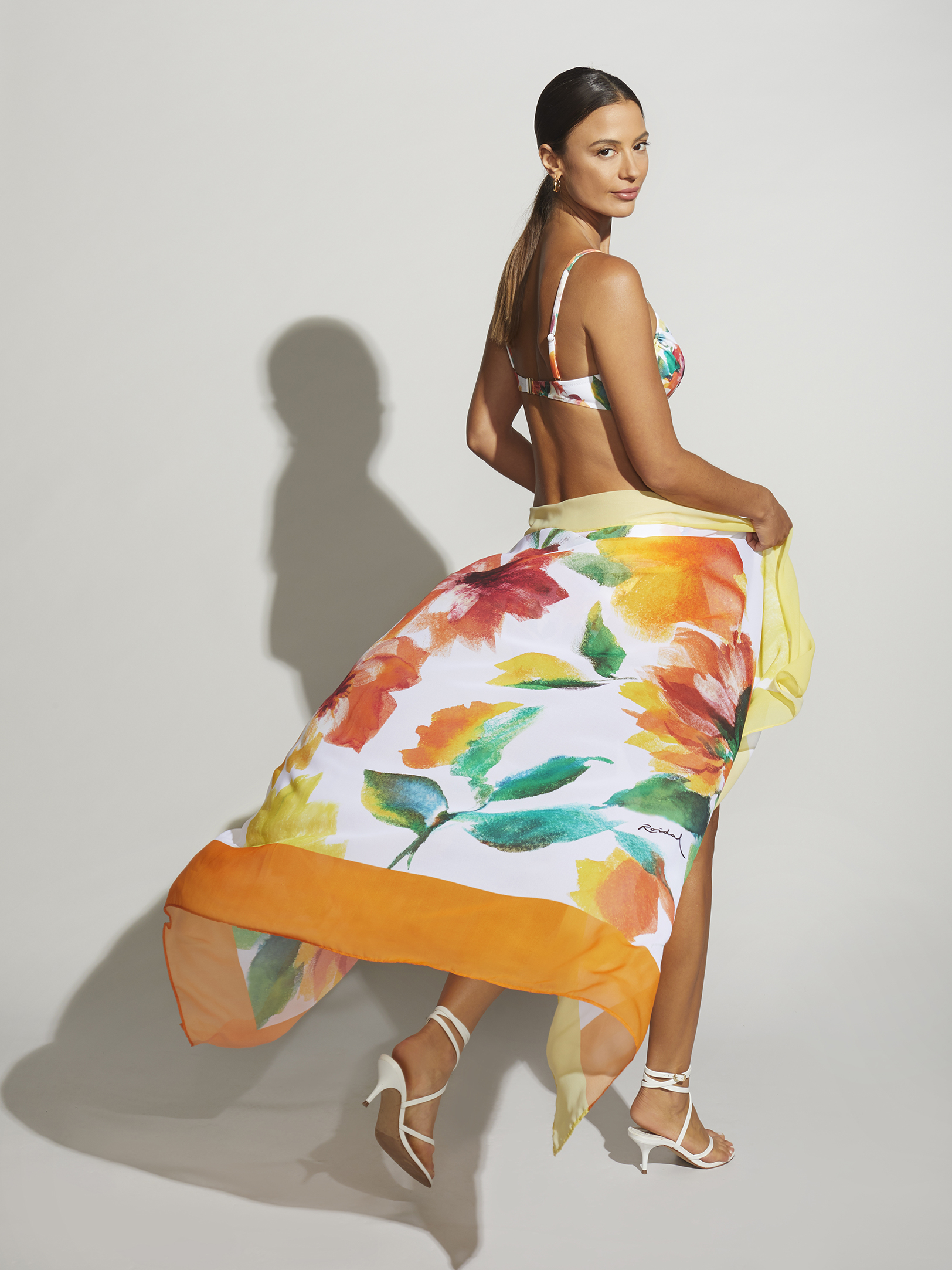
How to Wear a Sarong as a Long Skirt
The long skirt is the most elegant version of the sarong. It adds movement, gives more coverage, and creates a very flattering effect when the fabric falls well. It is a good choice for going from the hotel to the beach, having a drink after a swim or elevating a simple bikini without adding too many layers.
To achieve it, use the sarong unfolded. Place it behind your waist, bring the ends to one side and tie a knot at the height that feels most comfortable. If you want to visually lengthen the leg, leave a soft side opening. It does not need to be too pronounced: it is enough for the fabric not to fall completely closed.
If the sarong is very wide, you can cross one end in front of the body before tying it. This creates a wrap effect, similar to a wrap skirt, that looks especially good with flat sandals, a basket bag and sunglasses.
A long sarong skirt pairs very well with structured bikini tops, bandeau tops or straight-neck swimsuits. The balance lies in letting the sarong be the piece with movement and keeping the rest of the look cleaner.
How to Wear a Short Sarong for a More Comfortable Look
A short sarong is perfect if you want something quick, fresh and easy to wear. It is not designed to cover too much, but to add comfort when moving around the beach, sitting on the sand, or going to get a drink without fully dressing the look.
To do it, fold the sarong horizontally until you get the length you want. Then place it around your hips and tie it to one side. You can wear it lower on the hips for a relaxed effect, or higher at the waist if you want to define the silhouette more.
This style works especially well with bikinis because it lets the top of the set show and keeps a very summery feel. If you want a more balanced result, pair a printed sarong with a plain bikini, or the other way around: a printed bikini with a sarong in a neutral shade.
To complete the outfit, you can play with other beach accessories such as tunics, light dresses or accessories that stay within the same colour range.
How to Wear a Sarong with a Bikini or Swimsuit
A sarong is not worn in exactly the same way with a bikini as it is with a swimsuit, and understanding that difference helps the whole outfit work. With a bikini, the sarong usually acts as a balancing piece: it covers the lower half, adds movement and lets the top take centre stage.
If you are wearing a triangle or bandeau bikini, a long sarong skirt creates a very elegant contrast. If the bikini has a strong print, choose a more understated sarong. If the bikini is plain, you can go for a sarong with more colour, texture or pattern.
With a swimsuit, the sarong can create an almost dress-like look. A one-piece swimsuit combined with a long sarong tied at the waist feels more sophisticated and is very flattering for beach plans that continue out of the water. In this case, side knots and fluid drapes work particularly well.
If you want to build a complete look, always think about proportions. A bikini with clean lines can handle a more statement sarong; a swimsuit with a striking neckline or print calls for a simpler sarong.
Common Mistakes When Wearing a Sarong
Although a sarong is easy to wear, there are a few mistakes that can make the result look less polished. The first is choosing a fabric that is too stiff. If the fabric does not fall well, the knots look bulky and the sarong loses movement.
Another common mistake is tightening the knot too much. A sarong should hold, but not compress. If you tie it too tightly, the fabric wrinkles, marks the waist and becomes uncomfortable when walking or sitting down.
It is also worth avoiding a sarong that competes with the rest of the look. If you are wearing a very printed bikini or swimsuit, choose a cleaner sarong. If your swimwear is understated, you can use the sarong to add colour or texture.
Finally, not every knot works for every plan. A high, tight knot can work well for walking, but it may be uncomfortable if you are going to spend a lot of time sitting down. Before you leave, test how the sarong behaves when you move, sit and stand up.
How to Choose the Right Sarong
For a sarong to look good, knowing how to tie it is not enough. The fabric, size and design directly influence the result. A sarong that is too small limits the ways you can wear it; one that is too stiff does not fall naturally; and one with a print that is hard to combine will be worn less than expected.
Size comes first. If you only want to wear it as a short skirt, you do not need a particularly large piece. But if you also want to use it as a dress, long skirt or shawl, choose a wide sarong that lets you play with the fabric.
Drape is just as important. Lightweight, soft fabrics with movement work better for side knots, wrap dresses and long skirts. They also take up little space in your suitcase and dry easily, which is very practical on holiday.
When it comes to colour, think about the swimwear you usually wear. A sarong in neutral tones goes with almost everything; a printed one can become the main piece of the look. If you want to go deeper into this piece, we explain what a sarong is and how to choose the perfect one to help you get it right.
Other Ways to Wear a Sarong as an Accessory
A sarong does not have to be limited to the waist. It can also work as a shawl over the shoulders when evening falls, as a large scarf to protect you from the sun or even as a decorative piece over a sun lounger.
One simple way to wear it is open over the shoulders, like a light cape. It does not provide much warmth, but it adds coverage and looks very elegant over a one-piece swimsuit. You can also tie it at the front, at chest height, to create an informal kimono effect.
Another option is to use it as a top. Fold the sarong into a band, place it around the bust and tie it at the back. If the fabric is wide, you can cross it at the front before tying it for extra support. It is a useful alternative when you want to improvise a beach look with a skirt or fluid trousers.
If you prefer a ready-made piece with that same relaxed effect, beach cover-ups are a comfortable option for covering up without losing lightness.
How Do You Wear a Beach Sarong Easily?
The easiest way is to wrap it around your waist and tie a side knot. You can wear it long or fold it to create a short skirt. It is quick, comfortable and works with almost any bikini or swimsuit.
How Do You Wear a Sarong as a Dress?
Place the sarong behind your back, bring the ends to your chest and tie them at the front for a strapless dress. If you prefer a halter effect, cross the ends at the front and tie them behind your neck.
How Do You Tie a Sarong So It Does Not Fall Down?
The best option is to make a firm knot, but not an excessively tight one. If the fabric slips, lightly roll the ends before tying them or add a small second knot for extra hold.
Which Sarong Is the Most Flattering?
Sarongs with a good drape and a generous size tend to be the most flattering because they allow you to create long skirts, wrap dresses and side knots without the fabric looking stiff. Tones that work with your bikini or swimsuit also help create a more harmonious look.
Can You Wear a Sarong Away from the Beach?
Yes, especially if you wear it as a long skirt, light dress or shawl over the shoulders. For informal summer plans, a well-tied sarong can work as an elegant and comfortable accessory.
The Sarong: A Simple Piece That Changes the Whole Look
Learning how to wear a sarong does not require a complicated technique, only trying different styles until you find the ones that suit you. As a short skirt, long skirt, halter dress, strapless dress or light shawl, the sarong can transform a swimwear look in seconds.
The key is choosing a pleasant fabric, making clean knots and adapting each way of wearing it to the plan: beach, pool, walk or lunch by the sea. With a single piece, you can gain comfort, style and versatility throughout the summer.
August, 6th 2026
Beach Dresses for Women: How to Choose the Ideal Design for Every Plan
Next article