Maternity Swimsuit: How to Choose the Best One During Pregnancy

Date
July, 23rd 2026
Author
Roidal
Tags
#Collection#Tips
Pregnancy reshapes your body in a way that no ordinary garment is really built to follow — and that includes your swimsuit. If summer is approaching and your bump is growing week by week, finding the right maternity swimsuit isn’t about vanity. It’s a decision that has a direct effect on your comfort, your freedom of movement and how you feel in the water.
The good news is that there are designs made specifically to work with every stage of pregnancy, and maternity swimwear today holds its own against any other seasonal collection. Here’s everything you need to know to get it right.
Why an Ordinary Swimsuit Isn't Enough During Pregnancy
It comes down to the fabric and the cut. A regular swimsuit is designed around a stable silhouette, one where the bust and waistline don’t change much. In pregnancy, both shift constantly and gradually — which is why a swimsuit that fitted beautifully in your first trimester can feel tight, restrictive or simply uncomfortable by the third.
A swimsuit made for a growing bump needs fabric with well above-average stretch: one that can give without losing its shape and bounce back after every wear. Cheaper fabric gives up within weeks, and once it does you’re left with chafing, poor support and that tight, pinched feeling across sensitive areas like the bust or the belly.
Maternity swimwear also has to deliver genuine bust support, because your chest gains volume during pregnancy and needs more holding than usual. Rigid underwiring or hard, narrow straps can be genuinely uncomfortable — whereas a design built to move with you and support without squeezing makes an enormous difference over a full day.
What to Look for in a Comfortable Maternity Swimsuit
It helps to know exactly what you’re looking for before you start. Not every swimsuit marketed as “pregnancy-friendly” actually ticks the boxes that matter. These are the ones that do:
- Four-way stretch. The fabric needs to give in every direction so it can follow your bump as it grows, without pulling or feeling tight anywhere.
- Bust support with no underwiring. Underwires press on areas that become far more sensitive during pregnancy. Look instead for soft cups, reinforced straps or a wide underband — support that holds without digging in.
- No raised seams across the belly. Flat seams, or no seams at all over the abdomen, prevent the rubbing that irritates skin already stretched and far more reactive than usual.
- Chlorine- and saltwater-resistant fabric. Pregnancy often means more pool time as well as beach days. A quality fabric stands up to chlorine and salt without going baggy or losing its colour.
- Adjustable fit. Since your shape keeps changing month to month, swimsuits with adjustable straps or wrap-style cuts will stay wearable for far longer.
Types of Adaptable Maternity Swimsuit
There’s no single maternity swimsuit that works for everyone. The right one depends on your trimester, on what you’ll be doing in it — pool sessions, beach days, hydrotherapy — and on how much coverage you personally want.
One-Piece with a Roomy Front Panel
This is the most versatile option, and the one most often recommended for the second and third trimesters. A one-piece swimsuit with a wide, stretchy front panel holds and covers your bump without pressing on it, so you keep complete freedom of movement. It also covers the lower back, which tends to take on extra strain as pregnancy progresses.
Crossover or Adjustable Neckline
A crossover neckline spreads bust support evenly instead of concentrating the pressure in one place. It’s a common feature in women’s swimsuits that balance function and design, and it has an extra advantage: the crossover adapts to different bust sizes, so you’re less likely to need a new size as you change.
Side-Draped Swimsuit
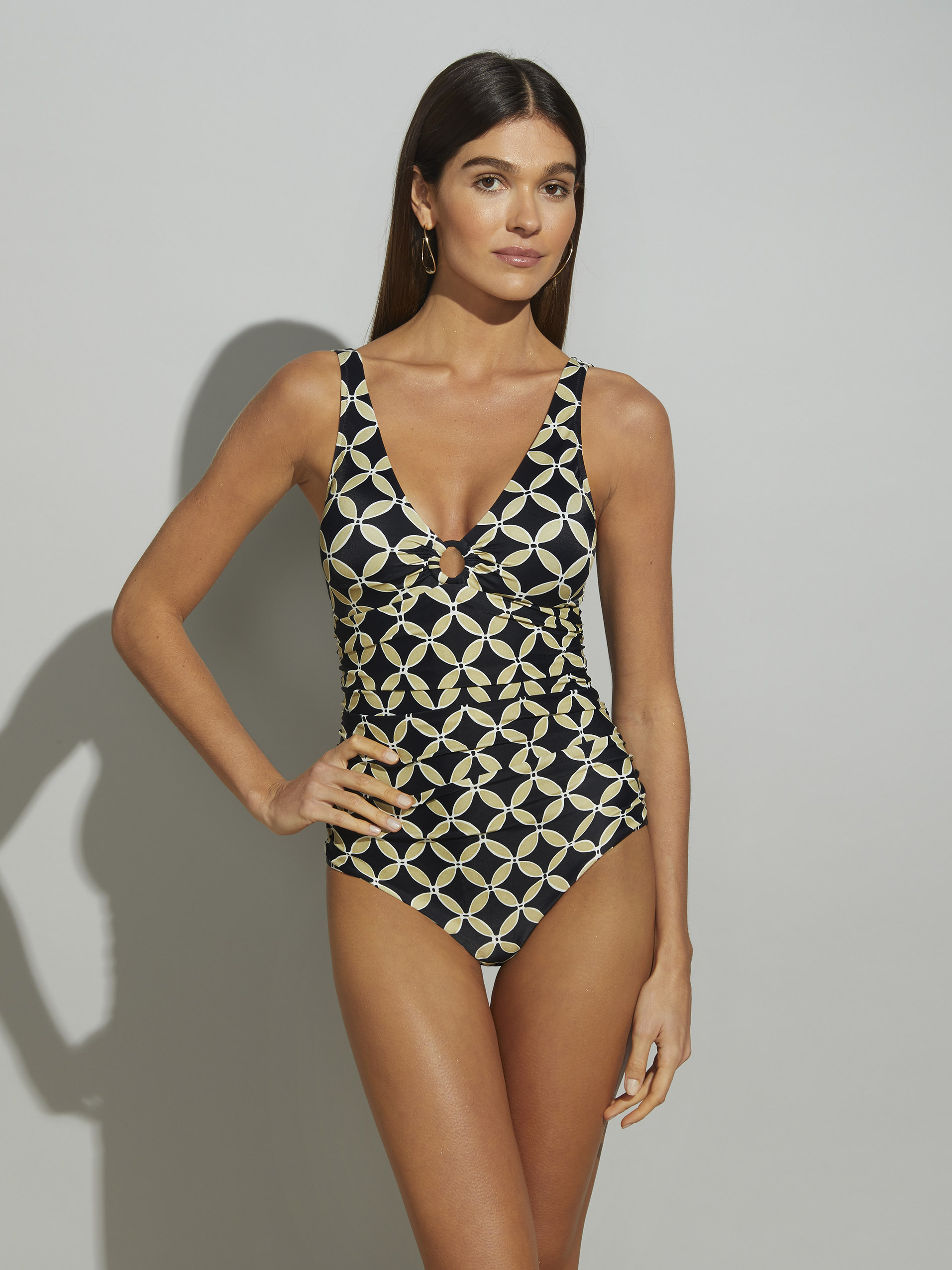
A side-draped swimsuit does more than look good: the gathering softens volume at the sides and rebalances the silhouette visually, which is very flattering during pregnancy. This finish, common in shaping swimsuits, also stops the fabric from clinging across the bump, because the extra material falls naturally instead of stretching flat.
High-Waisted Two-Piece with a Sports Top
One-pieces are usually the easier choice, but plenty of women prefer a two-piece with a high-waisted bikini bottom that covers the bump. If you go this route, the top has to offer real support, and the bottoms should sit above your navel so nothing presses on the pelvic area.
How to Choose the Right Size in a Maternity Swimsuit
Sizing is probably the trickiest part of buying maternity swimwear. The rule of thumb is simple: go up at least one size from your usual pre-pregnancy size, and choose with the right trimester in mind — the one you’ll be in when you actually wear it most. If you’re only a few weeks along but summer will catch you in your third trimester, buy with room to grow.
| When you buy | What size to choose |
|---|---|
| First trimester | One size up from your usual size |
| Second trimester | One to two sizes up from your usual size |
| Third trimester | Two sizes up, or a one-size XL/XXL |
| Just after birth | Stick with your third-trimester size |
Remember that your bust grows too, particularly from the second trimester onwards. If the swimsuit has structured cups, check that both your torso and cup measurements match where you are now, not where you were before pregnancy. The Roidal size guide is a good place to compare. When you’re torn between two sizes, the larger one is always the more comfortable choice — and plus sizes can give you that extra room for the final stretch.
A tip: if you’re buying in your first trimester to cover the whole season, go for designs with adjustable straps and high-stretch fabric. They’ll let you adapt the fit as your body changes, so you won’t need to buy again halfway through.
The Best Fabrics for Maternity Swimwear
Fabric is the heart of any swimsuit, and during pregnancy the choice matters even more. Skin is more sensitive now, quicker to react, and under constant mechanical strain as your bump grows. A poor-quality fabric only makes all of that worse.
The fabrics used in premium swimwear usually blend polyamide and elastane in proportions that deliver stretch and durability at once. Polyamide brings strength and a soft handle, while elastane provides the recovery that lets the fabric spring back into shape after every wear. That combination matters enormously in a maternity swimsuit, which will be asked to change shape continuously over an entire season.
Steer clear of fabrics with a low elastane content, or any that don’t state their composition at all. A swimsuit that goes slack after a few swims isn’t just uncomfortable — it stops supporting you properly, which is exactly what you need most right now.
It’s worth looking at the inner finish too. A soft lining through the cups and across the belly adds a noticeable layer of comfort and protects your skin from unnecessary rubbing. On long days at the beach or the pool, that detail makes a real difference.
How to Care for Your Maternity Swimsuit and Make It Last
A good swimsuit deserves looking after properly. You may well be wearing yours often during pregnancy, especially if you swim or do hydrotherapy, so the right care is what keeps it performing all season.
- Rinse and hand-wash it in cold water after every wear, without rubbing. Rubbing breaks down the elastic fibres and the fabric stops recovering its shape.
- Never put it in the washing machine or the tumble dryer. Heat and spinning are the two things high-stretch swim fabrics tolerate least.
- Always rinse it after swimming, whether you’ve been in the sea or the pool. Chlorine and salt eat away at the fibres if you let them dry in.
- Dry it flat in the shade. Hanging it up wet can pull it out of shape under the weight of the water, especially across the stretchiest areas like the belly.
- Don’t leave it folded while damp. Always store it completely dry so no moisture gets trapped in the fabric.
How to Style Your Maternity Swimsuit with Beach Accessories
Being pregnant doesn’t mean giving up a beach look with real personality. The right accessories turn a practical swimsuit into an outfit that feels put together and entirely yours.
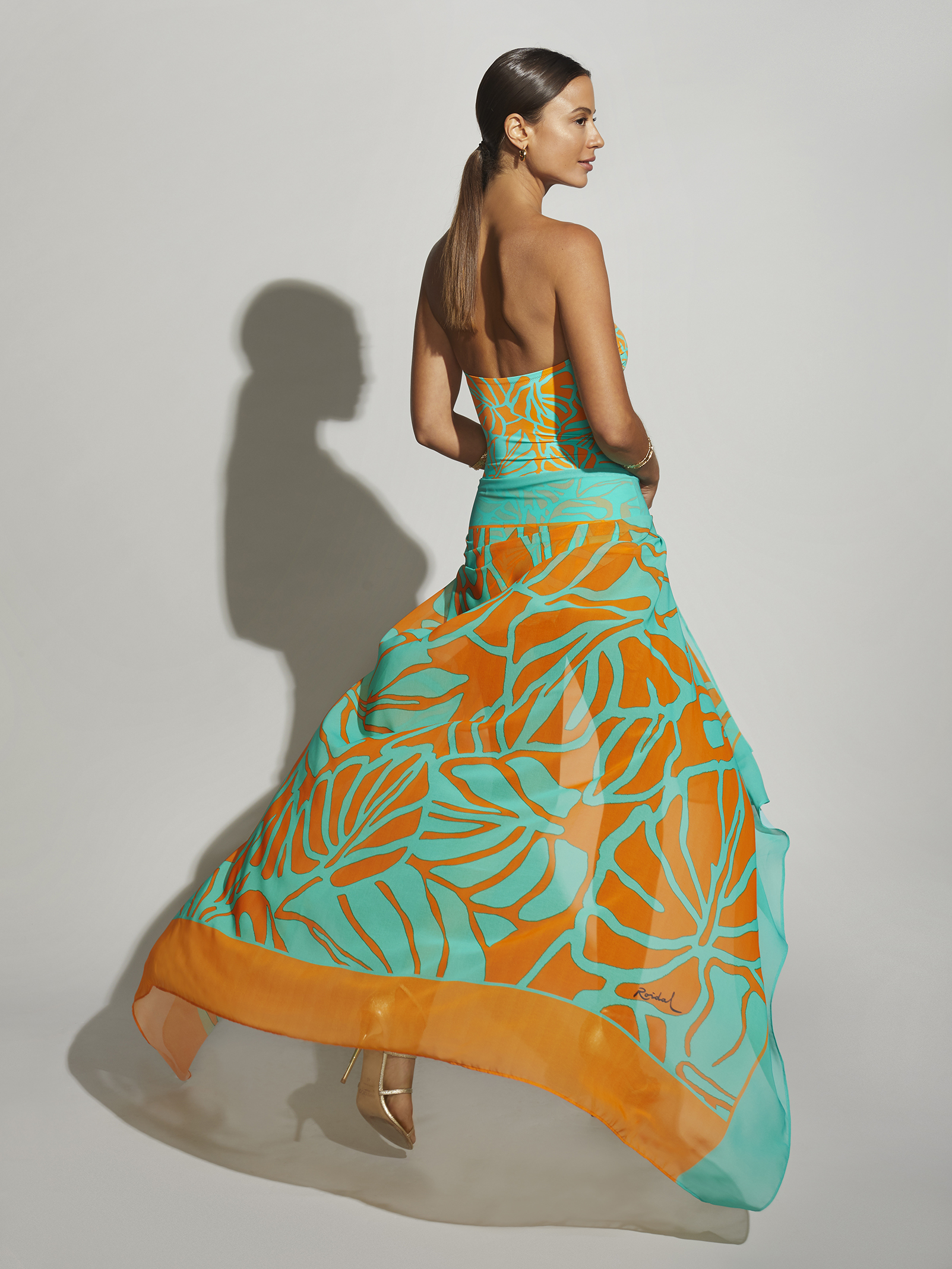
A lightweight sarong or kaftan is the obvious ally: it covers whatever you feel like covering, works with any shape and goes on and off in seconds. It pairs with any swimsuit and lets you move between the water and your sunlounger without changing. Beach dresses and the rest of the beachwear range are an easy way to finish the look without complicating your day.
As for footwear, flat sandals with a supportive sole are the sensible call. Your balance shifts as the months go on, and unstable heels or wedges are a risk you don’t need. A comfortable, well-fastened sandal is all it takes.
Swimwear during pregnancy doesn’t have to be a trade-off between looking good and feeling good. With the right piece, you get both.
When to Start Looking and How Many to Buy
The most practical question of all. It depends on when the warm weather arrives and which trimester you’ll be in by then. As a general rule, buy for the biggest you’ll be during the swimming season, not for the size you are on the day you buy.
If you’re in your first trimester and summer is around the corner, leave room for the third. If you’re already further along, buy for where you are now — it will very likely still work in those first weeks after birth, while your body finds its way back.
On quantity, two swimsuits is usually plenty for a season: one in use and one so there’s always a clean, dry one ready. If you’re at the pool several times a week, a third is a sensible investment — it gives the fabric time to recover properly between washes.
Choosing your maternity swimsuit well is one of those small decisions that genuinely changes how you experience summer while pregnant. Comfort, support and fabric quality aren’t minor details — they’re the foundation of a piece that will be with you through one of the most intense and memorable stretches of your life. Take your time and find the one that’s right for you.